
If you’ve ever wondered whether paid and organic search can work together, the answer is a resounding yes. Most marketers treat Pay-Per-Click (PPC) advertising and Search Engine Optimization (SEO) as entirely separate channels, with separate budgets, teams, and goals. That’s a costly mistake. The truth is, when PPC and SEO strategies are aligned and integrated, they create a compounding effect neither channel can achieve on its own. PPC provides speed, data, and precision testing. SEO provides long-term authority, compounding traffic, and credibility. Together, they cover the entire search landscape more completely than either can individually. According to Google’s own research on search advertising, paid search ads can significantly lift brand awareness and organic click-through rates, demonstrating a measurable synergy between the two channels. In this guide, we’ll break down exactly how PPC can help SEO, from keyword intelligence to content optimization, from faster testing to smarter targeting, giving you a concrete framework to integrate both strategies for better overall search performance.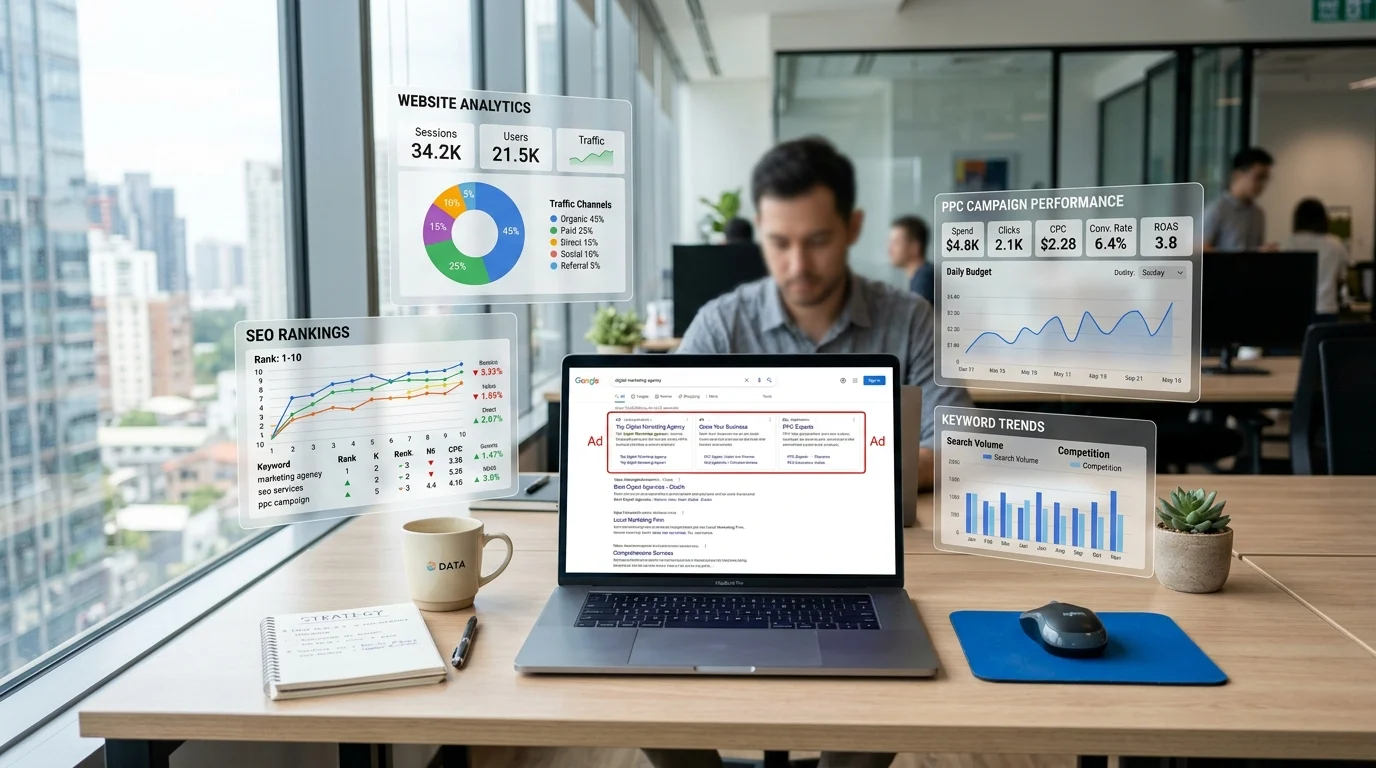
What Is PPC and How Does It Relate to SEO
Before diving into the integration strategies, it’s important to understand what each channel does and why they’re more complementary than competitive.
PPC (Pay-Per-Click) is a form of digital advertising where businesses pay a fee each time their ad is clicked. The most common form is Google Ads, where ads appear at the top and bottom of search engine results pages (SERPs) for targeted keywords. You bid on keywords, set a budget, and your ads run in near real-time.
SEO (Search Engine Optimization) is the process of optimizing a website to rank higher in organic (non-paid) search results. It involves on-page content, technical health, backlink building, and user experience improvements. SEO results take time, often months, but the traffic earned is free and compounds over time.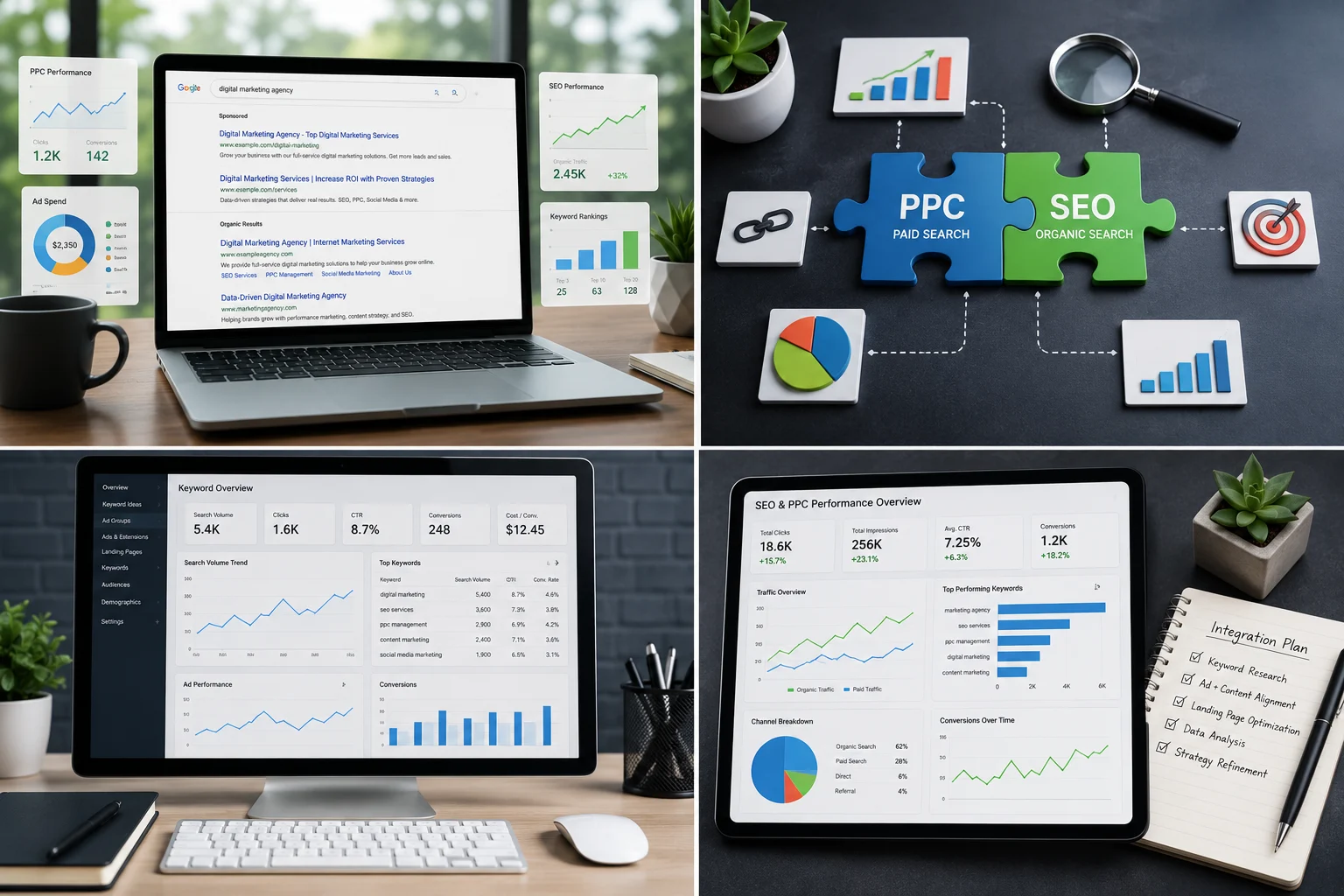
How PPC Can Help SEO Performance
At its core, PPC helps SEO by acting as a live laboratory. While SEO requires months to gather meaningful data on whether a keyword, headline, or landing page resonates with users, PPC can deliver the same insights in days or weeks. Here are the primary ways PPC improves SEO performance:
- Keyword validation: Test whether a keyword actually converts before committing SEO resources to rank for it.
- Content messaging: Run ad copy variations to identify which headlines and descriptions generate the most engagement.
- SERP coverage: Appear in both paid and organic listings simultaneously, increasing total visibility.
- Audience insights: Use PPC audience data to understand who is converting and tailor SEO content to the same profiles.
- Backfill for gaps: Run PPC campaigns on keywords with weak organic rankings, ensuring no search opportunities are missed.
The intelligence gathered from PPC campaigns is not just useful for improving ads; it directly informs which pages to prioritize for SEO, what language to use, and what users are truly looking for when they search.
How SEO and PPC Work Together for Better Results
The combined power of PPC and SEO is greater than the sum of its parts. When both channels are managed in coordination, each strengthens the other.
- Dual SERP Domination: When your brand appears in both the paid and organic sections of a search results page, you own significantly more real estate. Studies consistently show that users who see a brand in both positions are more likely to click and trust the brand. Even if a user doesn’t click the ad, the brand impression from the paid listing reinforces the brand’s organic credibility.
- Shared Keyword Intelligence: PPC campaigns reveal which keywords are converting—not just driving traffic, but generating leads, sales, or sign-ups. This conversion data is invaluable for SEO teams that would otherwise rely solely on organic click data, which doesn’t directly reflect conversion intent.
- Unified Messaging: When PPC ad copy and organic page titles/meta descriptions use consistent language, the user experience feels coherent and trustworthy. A brand that says one thing in its ads and another in its organic listings creates cognitive friction, reducing conversions across both channels.
Does PPC Directly Impact SEO Rankings
This is one of the most common questions in digital marketing, and the answer requires clarity: PPC spending does not directly improve organic rankings. Google has publicly stated that paying for ads does not give a website any advantage in organic search rankings. The two systems—Google Ads and Google Search—operate independently. No amount of ad spend will move a website up the organic results. However, PPC indirectly influences SEO in several important ways:
- Brand Search Volume: Effective PPC campaigns increase brand awareness, which leads more users to search for your brand name directly. Branded search volume is a strong positive signal for SEO and can contribute to a domain’s overall authority over time.
- Traffic Quality Signals: PPC campaigns drive targeted users to your website. If these users engage well—spending time on the page, clicking deeper into the site, converting—these positive engagement signals (bounce rate, session duration, pages per session) can reinforce organic rankings.
- Remarketing to Organic Visitors: Using PPC remarketing to re-engage users who found your site organically keeps your brand top-of-mind, improves conversion rates, and reduces wasted organic traffic.
- Content Discovery: PPC campaigns often highlight which content topics resonate most with users, guiding SEO teams to invest more deeply in those areas.

Why Combining PPC and SEO Improves Visibility
Search visibility is not just about ranking number one for a single keyword. It’s about being present wherever your target audience is searching, in whatever format they respond to. Combining PPC and SEO achieves full-funnel search visibility:
- Top of Funnel (Awareness): Broad SEO content (blog posts, guides, explainers) captures users early in their research journey. PPC display and discovery campaigns reach users who haven’t searched yet.
- Middle of Funnel (Consideration): Comparison-oriented organic content (reviews, case studies, comparison pages) ranks for users evaluating options. PPC search ads appear for high-intent comparison queries.
- Bottom of Funnel (Conversion): High-converting landing pages rank organically for brand and product keywords. PPC campaigns retarget previous visitors and bid aggressively on transactional terms.
How PPC Data Helps Improve SEO Keyword Strategy
Keyword research is foundational to SEO, but traditional keyword research tools only show search volume and competition estimates. They can’t tell you which keywords actually convert for your specific audience. PPC bridges that gap.
- Conversion-Validated Keywords: When you run PPC campaigns, you get actual conversion data at the keyword level. You can see precisely which search terms led to a contact form submission, a phone call, a purchase, or whatever your conversion goal is. This data is gold for SEO.
- Long-Tail Keyword Discovery: The Search Terms report in Google Ads reveals the actual queries users typed before clicking your ad. This often surfaces highly specific long-tail keywords that keyword tools miss entirely. Many of these long-tail terms have lower competition and higher commercial intent, ideal candidates for SEO content.
- Negative Keyword Insights: PPC campaigns also reveal irrelevant traffic—searches that generate clicks but no conversions. These become valuable avoid signals for SEO, helping content teams steer clear of topics that attract the wrong audience.
Using PPC Insights to Optimize Content and Search Intent
Understanding search intent—what a user actually wants when they type a query—is the holy grail of both PPC and SEO. PPC gives you a faster, more direct path to understanding it.
- Ad Copy as Content Headline Testing: Before investing weeks in writing a comprehensive SEO article, test the headline as a PPC ad. Run three or four variations of potential titles as ad headlines and measure which gets the highest click-through rate (CTR). The winner tells you how users prefer information to be framed and becomes your SEO title.
- Landing Page Insights: The landing pages that perform best in PPC campaigns, measured by conversion rate and bounce rate, reveal what content structure, tone, and depth users prefer. SEO pages can be modeled after winning PPC landing pages.
- Search Intent Mapping: By analyzing which ads perform best for which queries, you can map user intent more precisely. A query like “how to reduce tax as a freelancer” signals informational intent, best served by a guide. A query like “hire a freelance tax accountant in London” signals transactional intent, best served by a service page. PPC data helps you match SEO content type to the right intent.
- Seasonal Content Signals: PPC campaigns respond immediately to seasonal changes in search behavior. If your PPC data shows a spike in certain queries around specific times of year, that’s a signal to publish or refresh SEO content in advance of those periods.
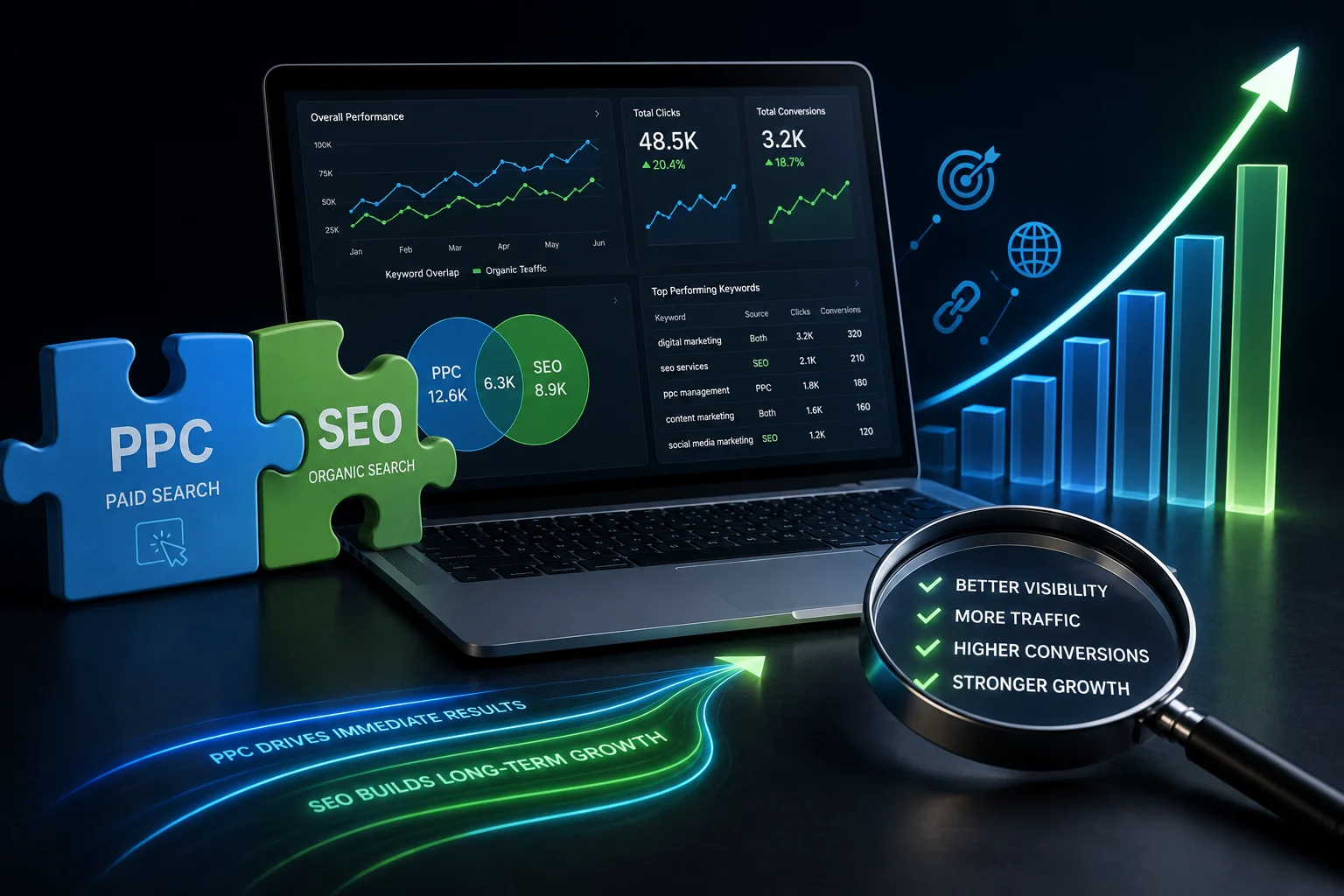
Best Practices to Integrate PPC and SEO Strategies
- Share Data Across Teams Regularly: Set up weekly or bi-weekly meetings between your PPC and SEO teams. Share Google Ads search term reports, conversion data, and top-performing ad copy with SEO. Share organic ranking data, top-performing pages, and content gaps with PPC.
- Align on Target Keywords: Build a master keyword list that both teams work from. Identify which keywords PPC is covering where SEO rankings are weak (and vice versa), so the combined coverage is intentional and comprehensive.
- Use PPC to Protect Brand Terms: Even when your brand ranks organically at position one, competitors may bid on your brand name in PPC. Running brand keyword PPC campaigns ensures you maintain a dominant SERP presence and prevents competitors from poaching your brand traffic.
- Coordinate Landing Pages: When SEO earns a ranking for a commercial keyword, align the PPC landing page for that same keyword. Consistent messaging between organic results and ads creates a seamless experience for users arriving from either source.
- Leverage Remarketing for Organic Visitors: Use PPC remarketing lists to target users who found your site organically but didn’t convert. This is a cost-effective way to recapture high-intent traffic that SEO drove.
- Use Google Analytics Audiences in Both Channels: Build audience segments in Google Analytics based on behavior (e.g., users who visited a pricing page, or who spent more than 3 minutes on a blog post). Apply these audiences to PPC campaigns for targeted bidding and use the same audience data to personalize SEO content.