“Most businesses are still trying to rank only for Google, but that era ended three years ago.” — Neil Patel, Digital Marketing Expert
In the same video, Patel mentioned that 73% of global internet users now turn to social media to research brands and products. It is a clear sign that being visible on Google is just not enough. With this shift in digital landscape, SEO and social media cannot operate in silos but must operate as a unified discovery system.
Today, search is not limited to a single platform, it is decentralized. Developers turn to Reddit for solutions, shoppers browse Instagram for inspiration, and younger audiences prefer TikTok for quick advice. However, each platform requires tailored optimization because of unique algorithms and audiences.
Businesses looking to enhance their online presence across the entire digital ecosystem need to understand how search engines measure authority and discoverability. It requires proper link management such as making citations scrabble and using clear and descriptive anchor texts that are useful for both users and algorithms.
How Can SEO and Social Media Work Together
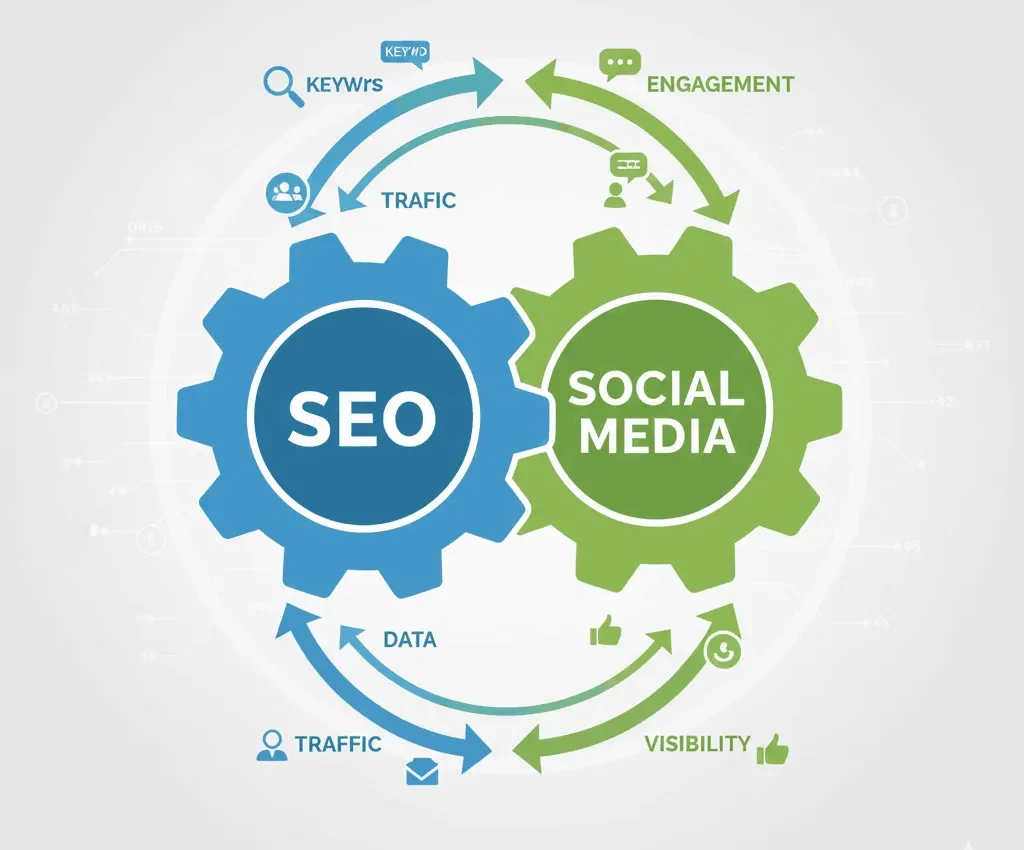
In 2025, social media and SEO don’t work separately, they support each other in many ways. Though social media does not directly affect rankings, it creates signals that make search engines recognize quality and authority. It helps boost a website’s overall visibility.
Content Amplification and Longevity
SEO and social media go hand in hand. Effective SEO helps content stay visible in search results for months or even years. It steadily drives traffic over time. On the other hand, posting on social media gives content a quick boost right after it’s published.
However, consistency is the key. By sharing posts across multiple social media channels increases reach and brings new audiences. Social media sharing keeps content relevant more than a 48 hour social window. When combined social media offers speed and SEO brings stability, enhancing the return on quality content.
Driving Qualified Referral Traffic
Often overlooked, social media platforms can be great sources of high-quality referral traffic. In fact, studies show that sharing content on social media can improve a website’s traffic by up to 31%.
Moreover, search engines consider it a strong sign of relevance and value when these users stay longer, explore more pages, or engage with the content. This positive user behavior mostly gives an extra boost in search rankings. And it is often faster than traditional SEO.
Fueling Backlink Acquisition
One of the major advantages of social media includes its ability to help earn backlinks. Backlinks are still one of the strongest ranking factors as they work as a vote of confidence from other websites. Content that performs better on platforms like Linkedin or X (Twitter) is usually noticed by bloggers, journalists, and industry experts earlier who may want to link back to it. This way, social media behaves as a visibility engine that makes content visible to the right audiences who can provide valuable backlinks.
Strengthening Brand Awareness and Branded Search
With active and engaging social media profiles, businesses can create brand awareness. It means people become more familiar and search for the brand directly. For example they are more likely to type “XYZ product review” instead of just “best product.” This increased branded searches signal search engines that the brand is trusted and authoritative. It strengthens the overall search presence of a business.
While social sharing boosts visibility and engagement, its true value of SEO lies in creating opportunities for high quality backlinks.
Social Shares vs Backlinks
Many people think social media likes, shares, and comments directly impact the Google rankings. But it is not true. Google has clearly mentioned that social signals are not direct ranking factors. They cannot work as a measure of quality as they can be easily faked or manipulated.
The Authority of Backlinks
On the other hand, backlinks are one of the strongest ranking factors in SEO. They act as votes of confidence. Simply put, when a trusted website links to yours, it indicates that your content is credible and valuable.
In contrast to social shares, backlinks pass authority like equity or PageRank that helps improve your search rankings. Apart from that, most social media links are tagged as nofollow and don’t directly add SEO value.
The Catalytic Role of Social Shares
Social shares are still important but in an indirect way. Though they don’t improve ranking by themselves, they help spread the content, increase traffic, and gain attention. Due to this increased visibility, the chances of earning backlinks from authoritative sites also increases.
In other words, social shares act as a megaphone that boosts reach, while backlinks work as the stamp of authority that search engines trust.
The table below shows the main differences between Social Shares vs Backlinks
| Feature | Social Share | Backlink (Dofollow) |
| Direct Ranking Factor? | No | Yes |
| Main Role | Content visibility, referral traffic, quick engagement | Authority transfer, credibility, long-term ranking |
| How Google Sees It | Engagement signal, relevance cue, brand awareness | Endorsement, vote of quality, trust & authority |
| Link Attribute | Nofollow or UGC | Passes link juice |
Social Profiles as Trust Signals in SEO

The importance of social profiles in SEO has become more evident since Google has explicitly shown its focus on E-E-A-T principles. Optimized social profiles play a great role in showing a brand’s or author’s digital identity.
E-E-A-T and Reputation Building
Google evaluates content on the basis of E-E-A-T principles. E-E-A-T stands for Experience, Expertise, Authoritiveness, and Trustworthiness. Each content piece, especially related to sensitive fields like health and finance must pass this criteria to be ranked higher in the search engine results.
The reputation of a brand or an author not only depends on its website presence but also on its social media activity. Moreover, how users interact with the brand and review about it also matter. An active and professional social media presence creates external proof that supports the claims made on a site are true.
Entity Resolution with Schema Markup
Social profiles help Google understand your identity. By adding Person Schema on author pages, experts can highlight their skills via “knowsAbout” and connect social or professional profiles using “sameAs”. With this consistent linking, Google can easily tie together different mentions of the same person or brand across the web. This process is called entity resolution.
Brands and authors can build stronger authority in Google’s Knowledge Graph by providing search engines with structured and verifiable information. Nowadays, this trend is growing fast. Between 2020 and 2023, the number of “Person” entities in the Knowledge of Graph grew more than 20 times.
Moreover, when authors actively share their expertise on social media and get engagement , it supports their author level E-E-A-T. That means, social media profiles are not just for marketing anymore. They have become vital SEO assets that help algorithms understand and trust the people behind the content.
How Viral Content Impacts Search Visibility
Though social sharing does not impact ranking directly, viral content on social media can create a ripple effect that helps enhance search visibility in various ways.
The Velocity Effect and Credibility
When content goes viral, it spreads fast and drives a great amount of referral traffic to a website. If they stay longer, click around, and engage positively If these visitors stay longer, click around, and engage positively, it signals search engines that the content is credible, useful, and trustworthy.
Branded Search and Search Spikes
With viral moments, businesses often experience a sudden rise in their brand name or keywords related to content. Normally, Google expects search trends to follow seasonal or predictable patterns. But when an unusual spike appears, like thousands of people suddenly searching for a brand, it signals strong demand and interest. This anomaly acts as a positive ranking factor that helps both the content and the brand rank higher.
Accelerated Backlink Growth
Viral exposure also makes it far more likely that bloggers, journalists, and authoritative websites will find the content and link back to it. So, instead of waiting for months for backlinks, brands can generate them in days with viral content. This makes a short buzz into long term SEO value.
Yandex Leak 2023: Social Media’s Role in Search
In 2023, a big source code was leaked from Russia’s largest search engine, Yandex. It provided SEO’s information about how modern algorithms work. Though Yandex and Google are different search engines, many of their ranking factors are quite similar to each other’s. For example, the ones around user signals, links and content quality.
This leak revealed an important factor that social media engagement related user behavior has a direct effect on search engine rankings. Here are some key findings.
- High authority domains’ links and mentions got more value
- Yandex had specific rules for TikTok. It showed the platform’s growing role as a discovery engine.
- Facebook Javascript and Google Analytics were treated differently. It showed that tracking setups can impact rankings.
- Ranking factors also consider the time and days users are most active that reflects how real time user behavior is influenced by social media activity.
All of these factors indicate that search engines do not ignore social media platforms when it comes to rankings. They actively integrate them into ranking models.
Quora and Pinterest: Social Media or Link-Building Tools?
There are some platforms that play a dual role. They are social media platforms that people also use for search purposes. It is important for brands to understand user intent to use them effectively.
- Quora is primarily about authority and link-building. Brands can build trust and drive referral traffic by answering questions with in-depth and keyword-optimized responses. Moreover, including strategic links in answers can help create long term visibility and backlinks.
- Pinterest works like a visual search engine. People turn to Pinterest to explore new ideas, plan, and find more information by clicking images. A strong presence on Pinterest can help brands to become more visible online. It is because Pinterest pins can keep bringing traffic for weeks unlike Instagram or TikTok posts that fade quickly. Brands can turn Pinterest into their second biggest traffic source after Google by utilizing the right keywords.
Platform-by-Platform SEO Impact
Nowadays, it is necessary to optimize different platforms accordingly. Brands that want to scale, must understand that each social media channel plays an important role in organic visibility but in different ways. Here are some examples.
Meta lets Google crawl public Facebook and Instagram posts, captions and Reels. It has made Facebook content a searchable SEO asset. Optimized profiles on Facebook along with local SEO help maintain consistent NAP details and encouraging reviews.Moreover, Facebook brings referral traffic and builds brand recognition while generating backlinks.
On Instagram, content ranks by search text, user activity, and popularity signals. Some best SEO best practices include:
- Brands looking to be visible should optimize their profiles by using target keywords in the name, username, and bio.
- Describe images with relevant secondary keywords. It improves accessibility and boosts Explore visibility. Use of strong captions, hashtags, and CTAs help brands maximize reach and traffic.
TikTok
Around 41% of youngsters use TikTok as a search engine. TikTok videos usually appear in Google’s short videos carousel. Here are three ways brands can optimize TikTok accounts for maximum visibility.
- Add keyword optimized captions
- The on screen text should be scannable by the algorithm
- Keywords should be spoken out loud in videos as the TikTok algorithm utilizes voice recognition.
Adding high performing TikToks into blog posts helps use website authority and improves search visibility.
YouTube
Youtube is Google’s own platform. Therefore, it dominates video search results. The algorithms of youtube favors videos according to watch time. A video has more watch time, the possibilities of its higher rankings get higher. Here’s how brands can optimize to make their content more discoverable
- Use descriptive titles with target keywords early, and write keyword-rich 250+ word descriptions.
- Make spoken content indexable, boost keyword coverage, and improve accessibility.
- Convert transcripts into blog posts for dual visibility across video and text search.
Wrapping Up
Though social media is not a direct ranking factor, it works as an authority multiplier for brands while enhancing indexing. It allows brands to get attention of the right audiences faster and earn backlinks. Moreover, it is a great source of validation when users show engagement. It is evident that SEO needs to be integrated with social media as they go hand in hand.
To get the best results, social media teams should adopt SEO tactics like the use of keywords, alt text, and structured data. Similarly, SEO teams must track decentralized search behaviors on platforms like TikTok, Instagram, Pinterest etc.
To create a successful online presence, a unified ecosystem is necessary to build with optimized content for both platforms and search engines. This approach ensures brands stay discoverable across the entire digital space.