Google Plus is often remembered as one of Google’s biggest social failures, but in SEO its legacy runs much deeper. At its peak, over 540 million users were registered on Google Plus, giving Google a massive dataset to study how social actions influence search. The platform introduced features that shaped search relevance, click-through behavior, and local visibility.
Many people remember the shutdown, but few know how much of its structure still exists inside modern SEO. If you’ve ever wondered why author identity, business verification, or local reviews matter so much today, the story of Google Plus explains it.
To understand that story, this guide walks through what Google Plus was, why it collapsed, and the systems it inspired. By the end, you’ll see how its ideas became part of the tools and signals we rely on now, including E E A T, local listings, and today’s search quality standards.
What Was Google Plus?
Google Plus (G+) launched in June 2011 as Google’s attempt to build a social layer that tied together user identity, content, and search behavior. The goal wasn’t to take on Facebook. The bigger idea was to add a layer of social trust into Google Search so the system could better understand who creates content, who endorses it, and how that should influence rankings.
The concept was simple. Verified identity and social connections would support more trustworthy and personalized search results. G+ was connected to other Google products from day one, which allowed users to:
- Share Posts and Join Communities: Standard social actions across interest groups.
- Endorse Content: The +1 button acted as a lightweight endorsement placed directly in Google Search.
- Establish Verified Identity: With Google Authorship, writers could link their content to a verified profile.
- Publish Reviews: Businesses could collect reviews and manage their presence through Google+ Local.
Together, these features gave Google a strong way to link authors to their work, highlight credible sources, and deliver more relevant results. The platform struggled as a social network, but the data it produced supported three major SEO areas at the time: personalized recommendations, author identity, and structured business information.
What Happened to Google Plus?
The consumer version of Google Plus collapsed due to low engagement and serious security incidents that weakened the trust it was built on.
The Engagement Crisis and Backlash
Even with its deep integration across Google’s products, G+ could not hold user attention. Reports showed that 90 percent of user sessions lasted under five seconds, which made it clear that people weren’t staying long enough to interact in any meaningful way.
Google also tried to push adoption by connecting G+ to other products. One of the most unpopular moves was requiring a Google Plus account to comment on YouTube. This caused strong backlash, user frustration, and public protests. Instead of helping the platform grow, it damaged its reputation.
The Security Crisis and Accelerated Shutdown
Two major security flaws ultimately forced Google to shut the platform down quicker than planned.
- First Incident (March 2018): A bug in the Google+ People APIs exposed basic profile data such as names, email addresses, age, and occupation across hundreds of apps. Up to 500,000 accounts were affected. Google fixed the issue but kept it quiet for months, which later caused more criticism than the flaw itself.
- Second Incident (November 2018): A separate bug affected about 52.5 million users, including enterprise accounts. This incident was serious enough to move the shutdown date for the consumer version from August 2019 to April 2019.
These events showed a clear lack of transparency at a time when online trust was becoming more important. Ironically, the platform created to support trust in search failed to maintain trust for itself. This reinforced why today’s SEO standards emphasize clear identity, accountability, and transparency.
Did Google Plus Really Affect SEO? Myths and Reality
Even though Google Plus is gone, many SEO myths persist. Two features, Google Authorship and the +1 button, often cause confusion about their effect on search rankings. Understanding what was true versus what was assumed helps clarify how these ideas evolved into today’s SEO practices.
Myth 1 – Google Authorship Was a Direct Ranking Factor
Google Authorship allowed writers to link their content to a verified G+ profile using the rel=author markup, displaying their name and photo in search results. These rich snippets often increased click-through rates (CTR), which led many to assume it also boosted rankings.
The Reality
Google confirmed that Authorship never directly influenced rankings. Gary Illyes, a Google Search analyst, stated that author identity was mainly used for the Knowledge Graph. Google could track creators even without visible markup.
Lasting Impact
While the markup was removed in 2014, the goal of highlighting trustworthy, knowledgeable creators lived on. Today, this concept exists in E-E-A-T (Experience, Expertise, Authoritativeness, Trustworthiness), requiring verifiable proof of expertise through credentials, experience, or third-party recognition.
Myth 2 – The +1 Button Was a Universal Ranking Factor
The +1 button acted as a social endorsement and could boost CTR and traffic. Some assumed this meant it was a universal ranking signal affecting all users.
The Reality
The boost was highly personalized. Only users logged into Google services could see the impact, and it depended on their social connections. Google explicitly stated that the +1 signal was limited to personalized search results. This established an important precedent: social signals can influence relevance but rarely act as core ranking factors.
While the myths clarify what did and didn’t directly influence rankings, Google Plus still left a lasting mark on SEO through its foundational tools for local search and structured data.”
Google+ Legacy – Local SEO and Structured Data
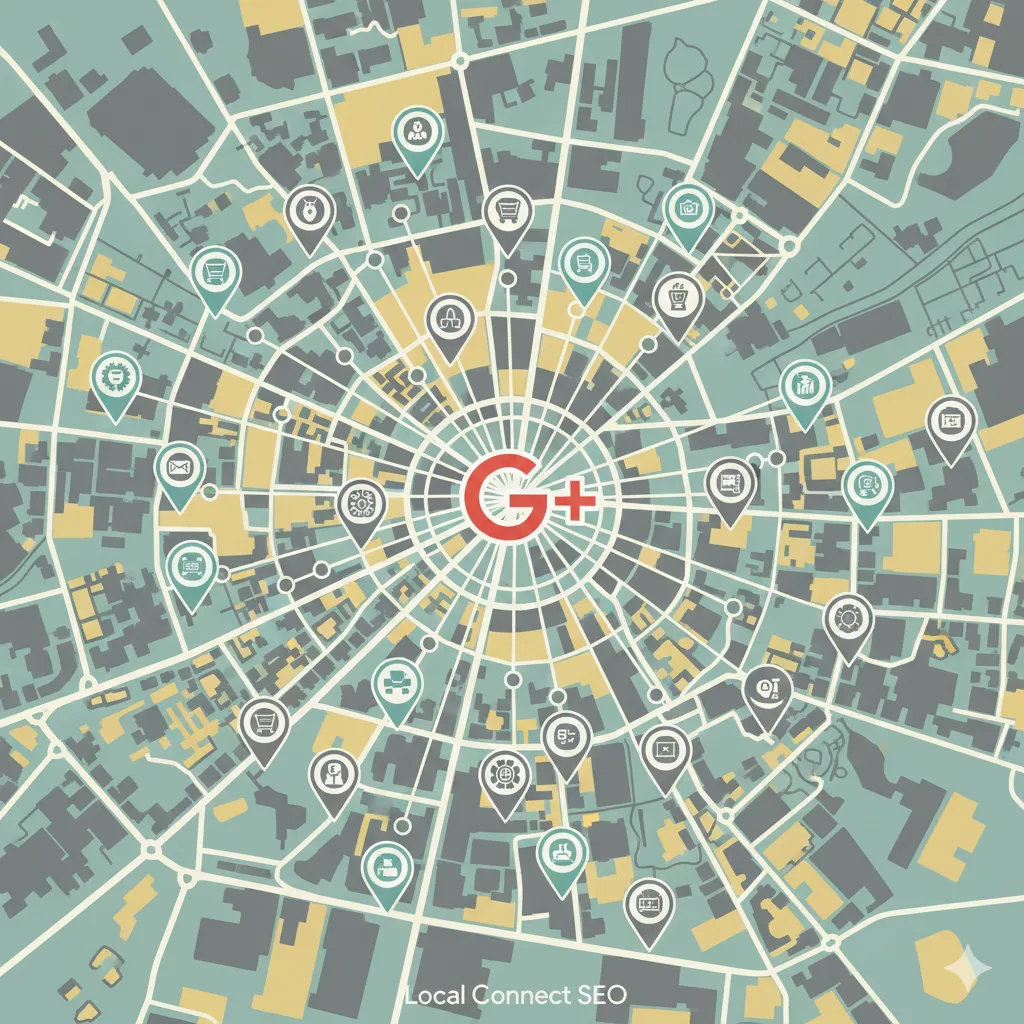
While G+ struggled as a social network, it played a crucial role in shaping modern local SEO and structured data practices.
The GMB Foundation
In May 2012, Google Places became Google+ Local. Businesses manage information, photos, and reviews through G+. By 2014, G+ Local merged with Google Places, forming the early structure of Google My Business (GMB). This created a verified, centralized source of business data and reviews, which remain strong trust signals for local search.
Reviews and Ranking
Reviews on G+ mattered. By 2015, they were a recognized factor in local rankings. Top-performing businesses averaged 4.11 stars, and 90% of local SEO professionals agreed that reviews directly influenced search visibility.
Local Pack Visibility
A strong G+ Local profile increased chances of appearing in the Local Pack (map with three featured listings). Research showed about 44% of clicks went to Local Pack listings, versus 29% for standard organic results.
Google+ vs Facebook: Why One Dominated and One Died
A common question that still comes up is why Google Plus struggled from the start while Facebook continued to grow worldwide. The difference comes down to user behavior, platform purpose, and how each company approached its strategy.
Network Effect and User Intent
By the time Google Plus arrived in 2011, Facebook already had a massive global presence. Its strength came from the network effect: people joined because everyone they knew was already there. It also appealed to all types of users, cutting across regions, ages, and interests.
- Facebook’s Approach:
Facebook built a space focused entirely on social interaction. It prioritized user attention, connection, entertainment, and engagement. - Google Plus’s Approach:
Google had a different goal. G+ was never meant to be a social hangout the way Facebook was. It was created to link identities across the web, support data verification, and feed signals into Google Search. In short, it was designed around utility, not leisure.
Feature Overlap and Forced Adoption
Google Plus mirrored many familiar Facebook features, Stream for the News Feed, Circles for audience segmentation, and +1 as the equivalent of a Like. But none of these features gave users a strong reason to switch platforms or divide their attention between two similar networks.
To speed up growth, Google made a risky move. It tightly bundled G+ with successful products like YouTube. Users were suddenly required to create or use a G+ account just to comment, upload, or interact. This aggressive approach backfired.
The result was public frustration, petitions, and boycotts. Instead of building loyalty, the forced integration created resentment and shaped the perception that G+ wasn’t a choice, it was an obligation. This significantly accelerated its decline.
How SEOs Used Google+ for Faster Indexing
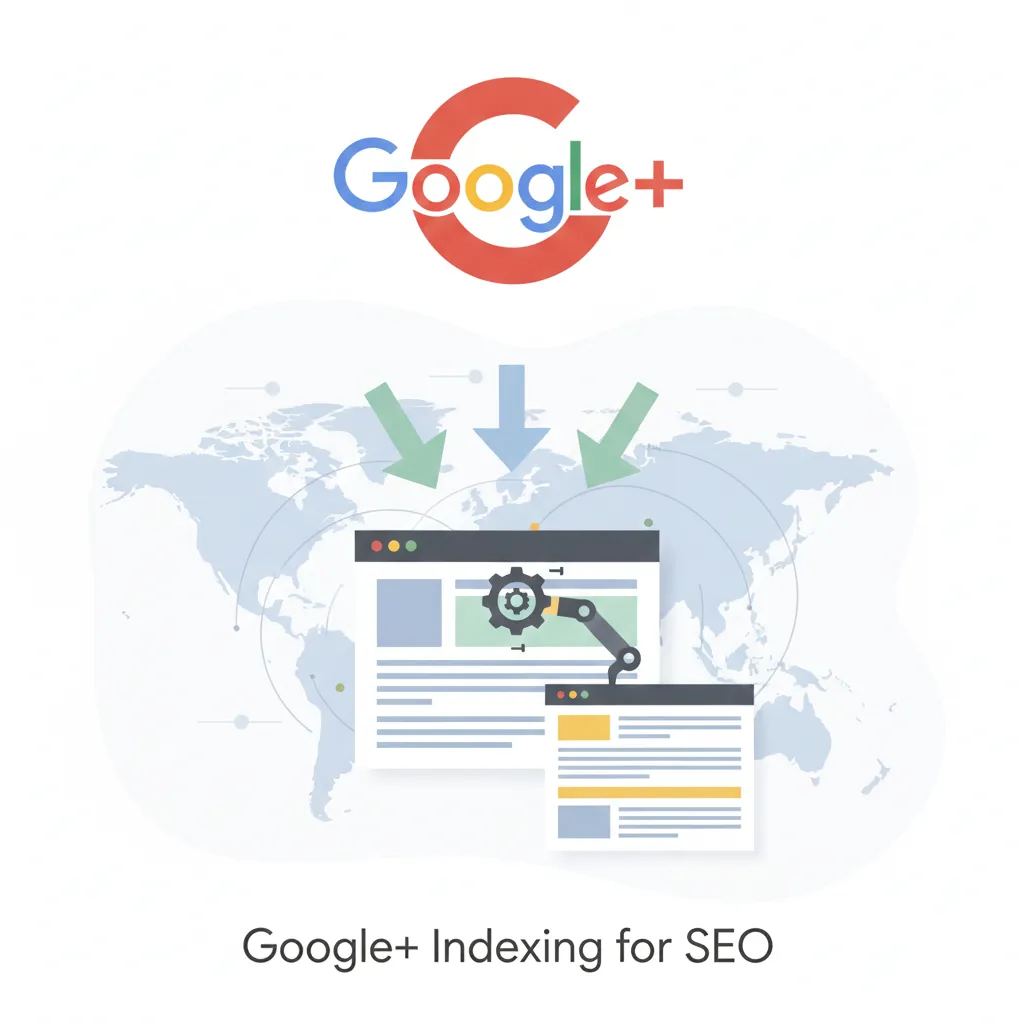
Google Plus offered one clear tactical advantage for SEO through the +1 button. It helped pages get indexed faster and improved visibility in search results.
Triggering the Google Bot
The +1 button played a technical role for SEOs who cared about fast indexing. When someone clicked the button:
- The action immediately notified Google’s crawler
- The crawler was then pushed to re-check and re-index that page
This allowed content to appear in search results much faster compared to normal crawl timing.
Boosting Personalized CTR
The +1 button had another effect for users who were logged in. If someone in your social circle had clicked +1 on a result, an annotation appeared next to the snippet.
- This acted like a social hint
- It made the listing more eye-catching
- CTR increased because people trust recommendations from their circle
This boost appeared only for logged-in users, so it worked as a personalized signal rather than a universal ranking factor.
Case Studies: Brands That Succeeded on Google+
Few brands achieved real social success on Google Plus. The strongest results came from features that later shaped modern Google products, particularly Local SEO and Authorship.
Local Pack Success with G+ Local
Google Plus Local became a valuable tool for small businesses, centralizing business information, reviews, and identity. This integration eventually evolved into Google My Business, helping many companies climb the Local Pack rankings.
For example:
- The Roofing King USA achieved top rankings for multiple high-intent local search terms, such as “Roof Repair Marcy – Ranked #1,” by leveraging the local search signals centralized by G+ Local.
Strong G+ Local profiles were especially effective, contributing to Local Pack listings that captured around half of the clicks for local searches.
Content Authority Success with Authorship
Publishers also benefited from Google Authorship features. By verifying authors and implementing structured data, they strengthened content credibility and visibility.
- Major Publishers: Early adopters of Authorship markup included sites like The New York Times, The Washington Post, CNET, and The New Yorker.
- Video Platforms: Platforms like Vimeo used structured data and Video SEO best practices at scale. Vidio leveraged similar systems to deliver locally relevant videos to users.
Authorship encouraged publishers to demonstrate real expertise, laying the foundation for today’s E-E-A-T framework (Experience, Expertise, Authoritativeness, Trustworthiness).
G+ Feature Breakdown
| G+ Feature | SEO Benefit (2011–2019) | Modern Concept | Current Google Signal |
| Google Authorship | Built author credibility | E-E-A-T | Author schema, bio pages |
| Google +1 Button | Increased CTR and helped re-crawling | Indirect engagement signals | User experience and Core Web Vitals |
| Google+ Local | Strengthened local visibility | Local trust signals | Google My Business |
Conclusion
Google Plus failed as a mainstream social network, struggling with widespread low engagement and later weakened by major security flaws. Yet despite its collapse, it played an important transitional role in shaping Google’s SEO ecosystem. It introduced the early framework for Local SEO, which later grew into Google My Business, and it pushed the idea of author credibility through Google Authorship.
The +1 button helped pages get indexed faster and improved personalized CTR, but the platform’s downfall highlighted Google’s need for stronger, more reliable quality signals. The core idea behind Authorship now appears in the E-E-A-T framework, where real expertise, clear author identity, and trustworthy content matter more than ever.
For SEOs, the lasting lesson from Google Plus is the value of visible human credibility supported by structured data and expert-reviewed content.