
Google Business Profile, previously known as Google My Business, plays a major role in how your local customers find you. When someone nearby searches for a service, your profile is often the first thing that shows up, which makes it a powerful part of your local SEO presence.
Search behavior confirms this. In the U.S., around 80% of people look up local businesses each week, and many search daily. A large part of these users skip the regular website results and click the listings in the Map Pack. Those clicks usually come from people who are ready to call, visit, or make a quick decision. If your profile is incomplete or not well maintained, you miss the chance to show up for customers who are ready to choose a business right away.
This blog walks you through how a strong and optimized Google Business Profile improves your local rankings, increases your visibility, and builds trust with the customers searching closest to you.
Let’s get into it.
What Is Google Business Profile?
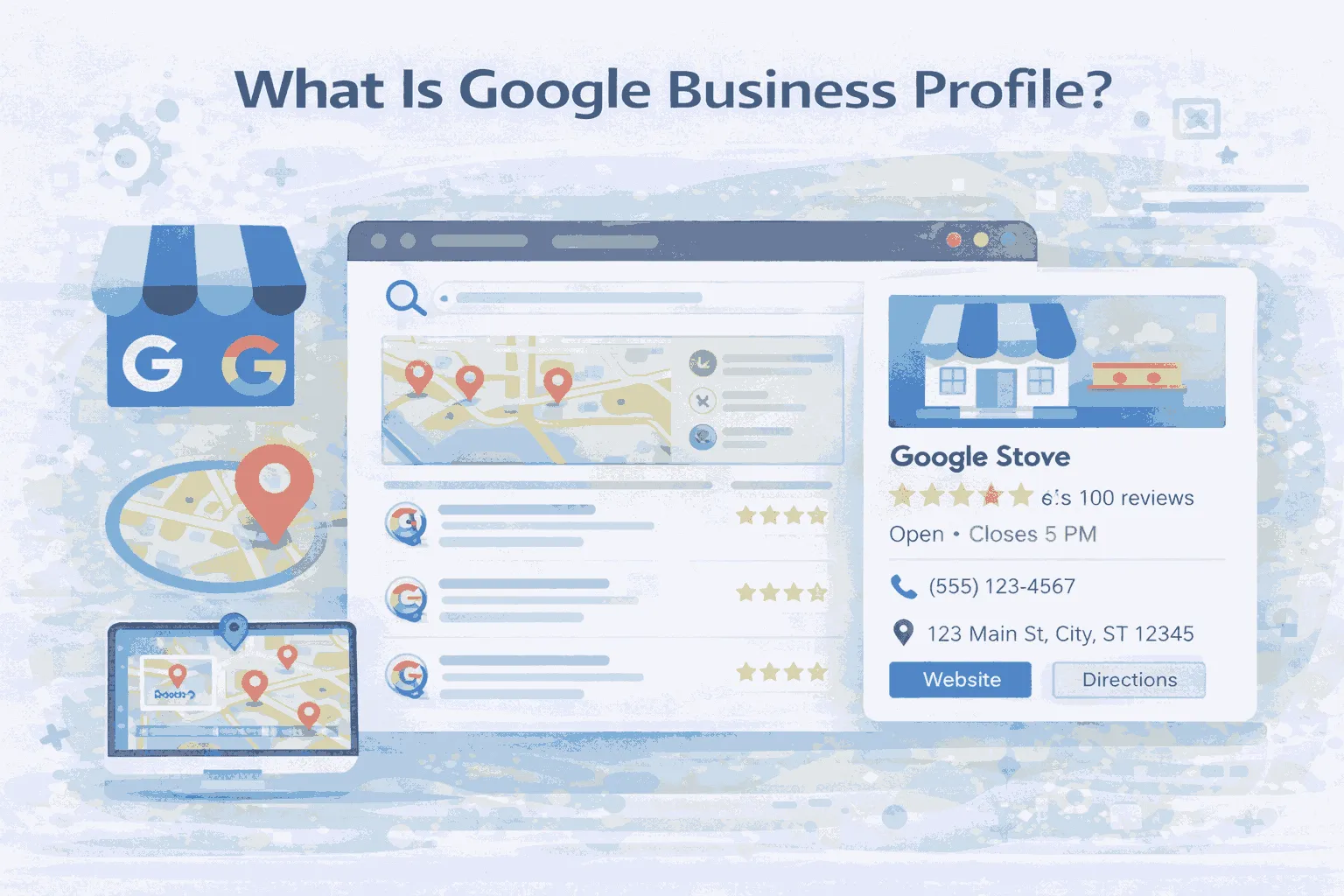
Many people still refer to it as Google My Business, but the platform was officially renamed Google Business Profile in 2022. The update came with new features and a smoother way for local businesses to manage how they appear on Google.
The Shift From GMB to GBP
Google changed the name to simplify things for business owners. Instead of using a separate app or dashboard, you can now manage most of your profile directly from Google Search and Google Maps. This update turned GBP into a more connected tool that fits naturally into the overall search experience.
Your Digital Storefront: Where GBP Shows Up
Your Google Business Profile acts as your visible storefront across Google’s local search results. The accuracy of your details and the quality of your profile influence how often you appear in key spots such as:
- The Local Pack
The three-map listings that show up at the top of search results when someone looks for a nearby service. - The Knowledge Panel
The information box that appears when someone searches for your business name on a desktop browser. - Google Maps
Your visibility inside the Maps app, including how easily customers can find your location or learn more about you.
Core Parts of a Strong GBP
A complete and well-maintained profile helps Google trust your business and show it more often. The main elements include:
- NAP Information
Your business name, address, and phone number. These must stay accurate and consistent. - Categories
Your primary and secondary categories, which show what your business does. - Reviews and Ratings
Customer feedback that influences both rankings and public trust. - Content Updates
Posts, photos, videos, and answers in the Q and A section that keep your profile active. - Extra Features
Services, products, offers, events, menus, and booking links when relevant.
Since GBP is managed right through Search and Maps, Google sees your updates in real time. Active profiles send strong trust signals, which helps your business earn more visibility and engagement.
Creating and Verifying Your GBP
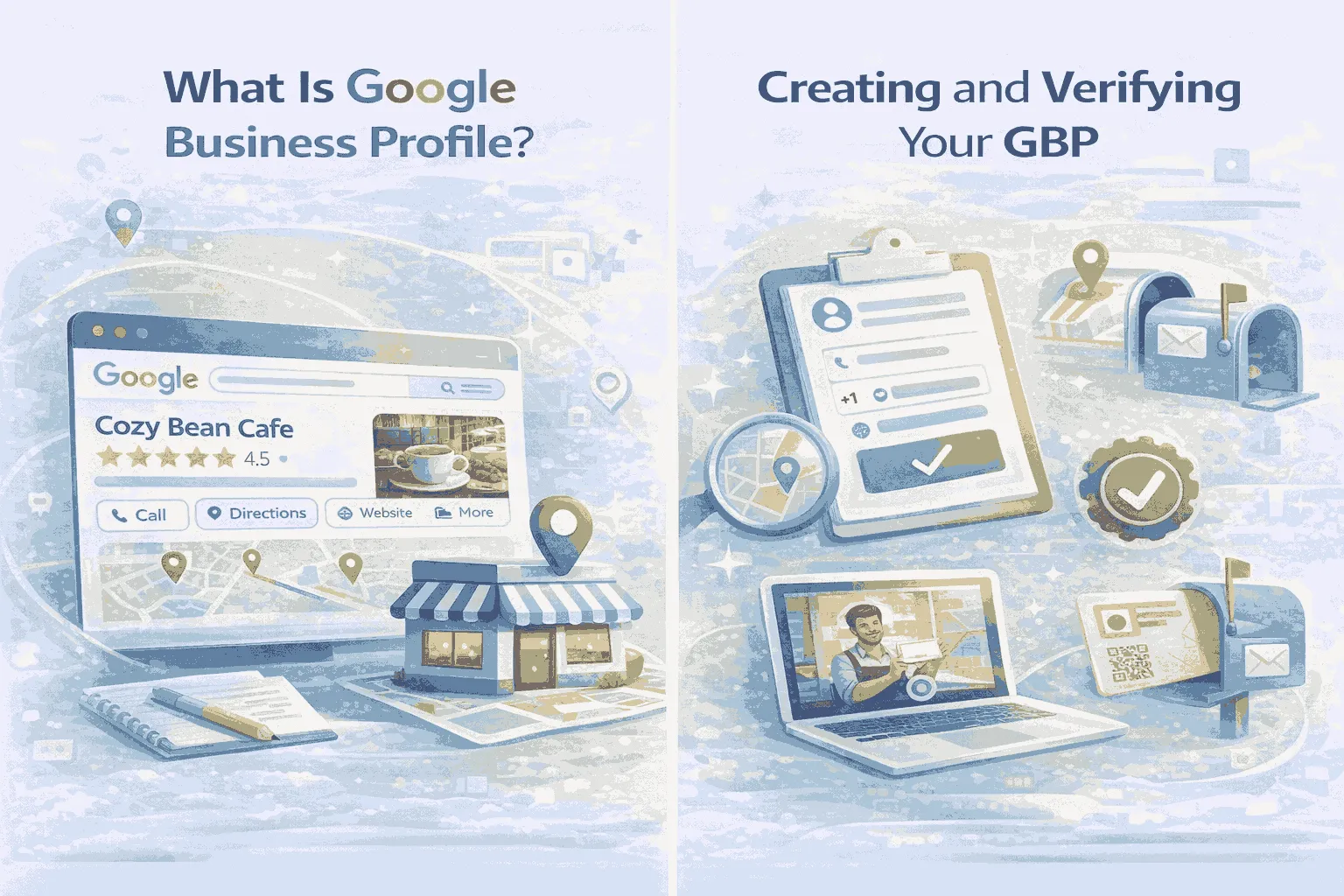
A complete setup followed by verification is the starting point for local SEO success.
Setting Up Your Profile
You begin by signing in with a Google account and heading to the profile creation page. The setup asks for:
- Basic Business Details
Your business name and whether customers visit your location or if you operate as a service-area business. - Contact Information
Your phone number, website, and address. - Claiming an Existing Listing
If Google already created a basic profile for your business, you can claim it through Search or Maps by selecting “Own this business” or “Claim this business.”
Verification: The Trust Checkpoint
Verification is required before your updates can appear publicly. It confirms that your business is real, active, and tied to your location. Methods include postcard, phone, text, or email.
Many businesses now receive video verification, which has stricter steps such as:
- Showing the Location
Recording street signs, building numbers, and nearby landmarks. - Showing the Business
For storefronts, this includes interior and exterior shots.
For service-based businesses, this includes tools, equipment, or other proof of real operations. - Showing Management Access
Proving you have permission to manage the business, such as unlocking a door or accessing business systems.
This process helps Google confirm real businesses and filter out fake or misleading listings. Using virtual offices or false addresses often leads to suspension, since they don’t meet Google’s trust requirements.
GMB Impact on SEO
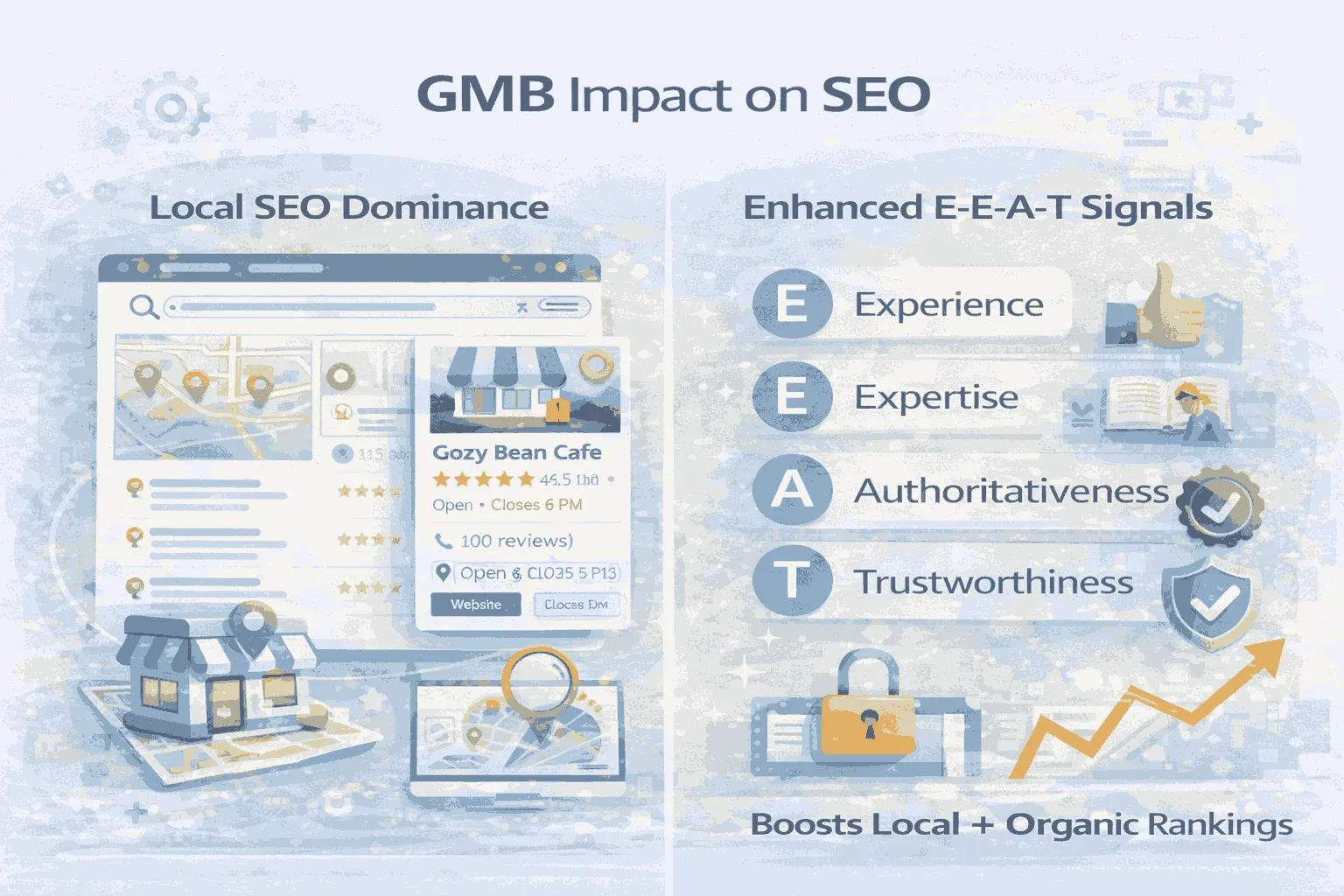
Your Google Business Profile does more than support your SEO efforts. It reshapes how Google ranks local businesses by giving local signals stronger influence than traditional website authority. The impact shows up in two ways: better visibility in local results and stronger credibility that supports overall organic rankings.
Direct Impact: Local Pack Results
When someone searches for a nearby service, your Google Business Profile plays the biggest role in where you appear. It is the top factor for ranking in the Local Pack and Google Maps, carrying about 32 percent of the ranking weight.
Google bases local rankings on three main pillars:
- Relevance
How well your categories, services, and business details match what the user is searching for. - Distance or Proximity
How close your business is to the searcher at the moment they run the query. - Prominence
Your digital reputation, shaped by reviews, links, and mentions across the web.
Reviews are the next major influence on Local Pack rankings, making up about 20 percent of the score. This places reputation management among the most important local SEO tasks.
Indirect Impact: Supporting E E A T for Organic Search
Your profile also strengthens your general SEO by boosting signals tied to E E A T, which stands for Experience, Expertise, Authoritativeness, and Trustworthiness. These signals guide how Google evaluates the quality and credibility of a business.
Here is how your profile helps build them:
- Trustworthiness
Accurate and verified NAP details build trust, and customer reviews provide real proof of reliability. - Experience and Expertise
Photos, product information, active Q and A responses, and other detailed content show real-world experience and industry knowledge. - Authoritativeness
A steady flow of positive reviews positions your business as a dependable choice in your local area.
These combined effects highlight something important. A small local business with a well-maintained Google Business Profile and strong reviews can outperform a large national brand in the Local Pack if the brand ignores its profile, even if the brand has stronger website authority. Local success depends on how well your profile is managed, not only on traditional SEO work.
Google Local Search Ranking Factor Weighting
| Factor Group | Local Pack / Maps Weight (%) | Local Organic Weight (%) | Strategic Takeaway |
| Google Business Profile Signals | 32 | 7 | Your profile is the foundation of Maps rankings. |
| Reviews | 20 | N/A (Indirect) | Strong reviews directly support your local visibility. |
| On Page SEO | 15 | 33 | Website optimization still drives organic search results. |
| Links | 8 | 24 | Quality links carry the most weight for organic authority. |
| Behavioral Signals | 9 | 10 | Better engagement and click patterns support both ranking types. |
Ways to Improve Your Google Business Profile Ranking
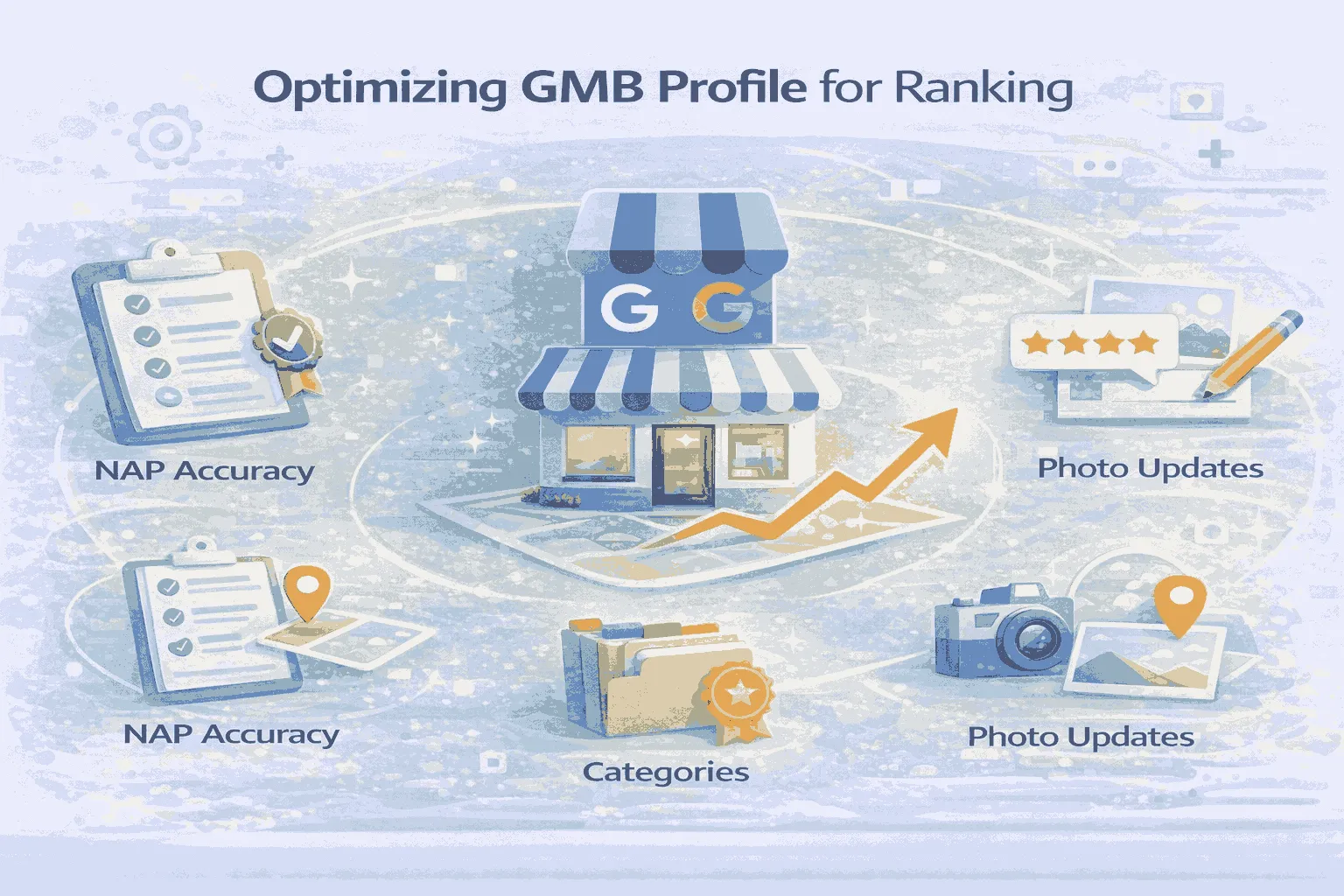
Improving your Google Business Profile ranking comes down to strengthening the three signals Google relies on most: proximity, relevance, and prominence. Each one plays a different role in how often you appear and how high you show up when someone in your area searches for your service.
Proximity and Location Relevance
You cannot change where a searcher is located, but you can make sure Google has accurate information about where your business operates.
- If you operate as a Service Area Business
Set your service boundaries carefully. When Google understands exactly which areas you cover, you have a better chance of appearing for searches inside those zones. - If you run multiple locations
Each branch needs its own separate and fully optimized profile. When every location is verified and active, you get stronger visibility in each part of your service region.
Category Optimization
Your categories play a major role in helping Google understand what you do. This is one of the strongest relevance signals in the algorithm.
- Primary Category Selection
Choose the category that fully represents your core service. This is a major ranking signal and should always match your main offering. - Secondary Categories
Use secondary categories to expand your reach into related searches. These help your profile match niche and long tail queries that relate to your business. Checking competitor categories is an effective way to identify category opportunities you may be missing.
Review Strategy and Why It Matters
Reviews contribute about 20 percent of Local Pack ranking weight, so they directly influence your visibility. A strong, well-managed review profile signals both quality and trust.
- Volume and growth pattern
Aim for a steady flow of real reviews over time. Google prefers natural, ongoing growth rather than sudden spikes. - Recency
Newer reviews carry more weight in the algorithm. Regular feedback keeps your profile active and signals ongoing customer engagement. - Response rate
Replying to every review strengthens trust, improves engagement signals, and shows Google that your business is active and well-managed. - Relevant keywords in reviews
Customers often mention the service they received. These natural keywords help Google connect your profile to specific search terms and boost relevance.
NAP Consistency and Citation Building
Your Name, Address, and Phone number must match everywhere online. This consistency is one of Google’s core trust signals.
- Matching details across platforms
Make sure your information is identical on your website, directories, social platforms, and industry listings. Even small differences in abbreviations or formatting can weaken your trust signals. - Building high-quality citations
List your business on reputable directories such as Yelp, Yellow Pages, and niche industry sites. These citations reinforce your business information and increase your overall authority in local search.
How to Optimize Your Google Business Profile
Optimizing your Google Business Profile goes beyond just setting it up. To rank well, you need to use all features strategically and keep your profile complete, accurate, and engaging.
Complete Your Profile
A complete profile signals trust and authority. Make sure every field Google provides is filled out:
- Business Description
Use the most important keywords and highlight your unique selling points in the first 250 characters. Google often weighs this section heavily when determining relevance. - Attributes
List relevant details like payment methods, accessibility options, and amenities. This helps your profile appear in niche searches and match specific user needs. - Products and Services
Include detailed listings for all services and products, along with descriptions, prices, and photos. This gives searchers the information they need and strengthens your profile’s relevance.
Use High-Quality Visuals
Photos and videos help people trust your business and improve engagement.
- Upload Regularly
Add high-resolution images of your storefront, interiors, products, and team. Consistent uploads signal that your business is active and reliable. - Geotag Photos
While not required, adding location data can help reinforce the connection between your visuals and your business location.
Leverage Dynamic Features
Dynamic features can boost behavioral signals, which account for about 9% of Local Pack rankings.
- GBP Posts
Share weekly or bi-weekly updates about promotions, events, or company news. These posts appear in search results, increasing visibility and click-through opportunities. - Q&A Section
Answer common questions proactively. Seed the section with 5–10 FAQs and monitor new questions daily. This demonstrates expertise and keeps your profile helpful and engaging. - Booking and Messaging
Enable direct booking links or messaging tools. Making it easy for customers to act improves their experience and your profile’s performance.
Optimization Checklist
| Area | Actionable Task | SEO Impact / Why It Matters |
| Core Information (NAP) | Ensure name, address, and phone match across all platforms | Builds trust, consistency, and citation authority |
| Categories | Select the most accurate Primary Category and use relevant Secondary Categories | Drives Local Pack relevance |
| Reviews & Ratings | Collect reviews consistently and respond to all feedback | Contributes 20% to Local Pack ranking and strengthens trust |
| Visual Media | Upload geotagged, high-quality images regularly | Improves engagement and shows real-world experience |
| GBP Posts | Publish updates weekly | Increases CTR and search visibility |
| Q&A Section | Seed with FAQs and monitor daily | Shows expertise and responsiveness |
| Description & Attributes | Complete description (focus first 250 characters) and list all attributes accurately | Helps match broad and niche searches |
Stay Within Google Policies
Aggressive optimization can boost rankings, but breaking Google’s rules can remove your listing completely. Adhering to policies is essential for long-term local SEO success.
High-Risk Violations
- Keyword Stuffing in your business name (e.g., “Best Pizza in New York”)
- Inaccurate Location like virtual offices or P.O. boxes
- Duplicate Listings for the same business or location
- Inconsistent NAP Data across platforms
Review Manipulation
Buying, trading, or incentivizing reviews is strictly forbidden. Organic, honest reviews are the only sustainable way to leverage your 20% ranking factor.
Ongoing Maintenance
- Regular Audits
Check that your NAP remains consistent across all platforms to avoid trust or suspension issues. - Account Security
Limit administrative access to trusted personnel and use strong security measures like two-factor authentication to prevent unauthorized edits that could hurt your rankings.
Competitor Analysis for Google Business Profile SEO
To succeed in local SEO, you need to analyze competitors through the lens of Google Business Profile performance, not just traditional website metrics like Domain Authority (DA) or Domain Rating (DR). Local advantage comes from strong reputation, proper category alignment, and active profile management.
Identifying the Local Pack Leaders
Start by pinpointing the 3–5 businesses that consistently appear in the Local Pack for your core target keywords. These are your true local competitors, and understanding their strategy gives you a blueprint for improvement.
Analyzing Competitor Category Alignment
Check the exact Primary and Secondary Categories your top competitors use. Matching or expanding on these categories ensures your profile is aligned with the same search queries. You may also uncover high-value niche categories that your profile currently misses.
Review Analysis: Sentiment and Keyword Insights
Reviews are one of the strongest indicators of local authority, and analyzing competitors’ reviews can give you a real edge.
- Benchmark Metrics
Compare review volume, average rating, and response rate. A competitor with a 100% response rate signals strong active management and a commitment to trust. - Identify Market Gaps
Look for common complaints in competitor reviews. For example, if delays are a frequent issue, highlight your punctuality in your description, posts, or Q&A section. - Keyword Extraction
Pay attention to frequently mentioned services or products in competitor reviews. Incorporate these naturally into your own GBP content to boost relevance for those search terms.
Auditing Competitor Content Strategy
Check how often competitors publish posts, updates, or events. This gives you a benchmark for profile freshness. Maintaining or exceeding this frequency ensures positive behavioral signals and keeps your profile competitive.
Key Competitor Metrics to Track
| Metric | Why It Matters | Actionable Strategy |
| Primary/Secondary Categories | Determines algorithmic relevance and query matching | Match or expand categories used by top competitors |
| Review Volume & Velocity | Accounts for 20% of Local Pack ranking (Prominence) | Track competitors’ review growth; increase solicitation efforts to maintain pace |
| Customer Sentiment Keywords | Reveals services/products praised or criticized | Highlight areas where you outperform competitors |
| Review Response Rate | Signals active management and Trustworthiness (E-E-A-T) | Aim for 100% response rate to show superior service |
| Posting Frequency | Drives positive behavioral signals | Match or exceed competitors’ posting frequency (e.g., weekly) |
Conclusion
The Google Business Profile is essential for local SEO success. It directly impacts over half of the Local Pack ranking factors, 32% from profile optimization and 20% from reviews. For the 42% of high-intent searchers who click on Map results, your GBP is the primary way to be visible and convert them into customers.
Active, strategic management of your profile is crucial. A fully optimized GBP improves algorithmic relevance, proximity, and prominence, while also reinforcing E-E-A-T signals, Experience, Expertise, Authoritativeness, and Trustworthiness, across Google.
Treat your GBP as a high-value digital asset: maintain full details, post regularly, manage reviews diligently, and follow Google’s policies. Doing so ensures you capture local search traffic and build lasting authority in your area.