
The first question every business owner asks when launching a website is does the domain name actually matter for Google rankings?. The simple answer is Yes. You want a name that sounds catchy, but you also want one that Google loves. The truth is, the relationship between your domain name and SEO has changed drastically over the years. It used to be a magic button; now, it is a foundation.
Statistics show that Google processes over 8.5 billion searches every single day. In that massive ocean of content, your domain name is your first handshake with a potential customer. It tells both the search engine and the human what you are about. But does it still hold the power to boost your rankings in 2026, or is it just a vanity label?
This guide breaks down exactly how domain names impact your visibility, from the risks of changing them to the truth about keywords and hyphens.
How Important is Domain Name for SEO?
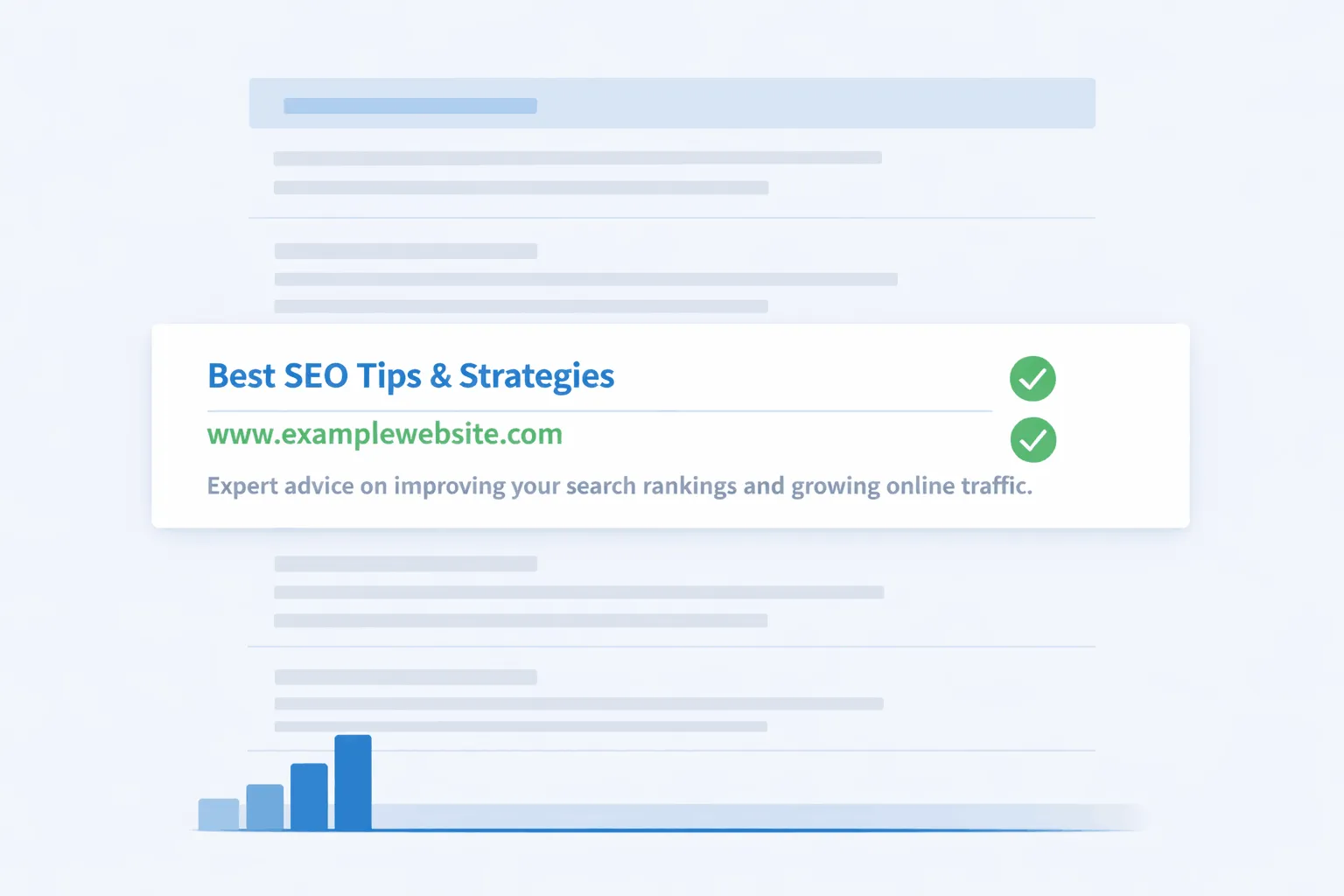
In 2026, the domain name is not a direct ranking factor. Google and other search engines have
moved away from simple cues and now rely on sophisticated algorithms that prioritize high-quality content, user satisfaction, and accumulated trust signals. Simply stuffing a keyword into your URL will not automatically guarantee you a spot on the first page.
However, dismissing the domain name entirely would be a massive mistake. It acts as a critical indirect SEO factor. Its primary value today is conveying professionalism. When a user scans search results, your domain is the first signal they use to assess credibility. Sites that use short, branded URLs significantly outperform long, keyword-stuffed names because they are easier to remember.
This perception of professionalism directly changes consumer behavior. Data indicates that mobile users are twice (2x) as likely to trust a site with a branded domain compared to a generic subdomain.
Domain Name and Searcher Engagement
Your domain name feeds directly into a vital ranking metric: Click-Through Rate (CTR). A clear and professional name encourages users to click.
- The Multiplier Effect: High CTR is a major engagement signal. In some algorithmic models, this is measured at a 12% weight regarding influence on rankings.
- The Feedback Loop: A trustworthy domain gets more clicks; those clicks tell Google your site is relevant; Google then rewards you with better rankings.
- Linkability: A highly brandable domain (ideally under 10 characters, though the average is 11–13) is naturally easier for other websites to cite, leading to more high-quality backlinks.
Does Changing Domain Affect SEO?
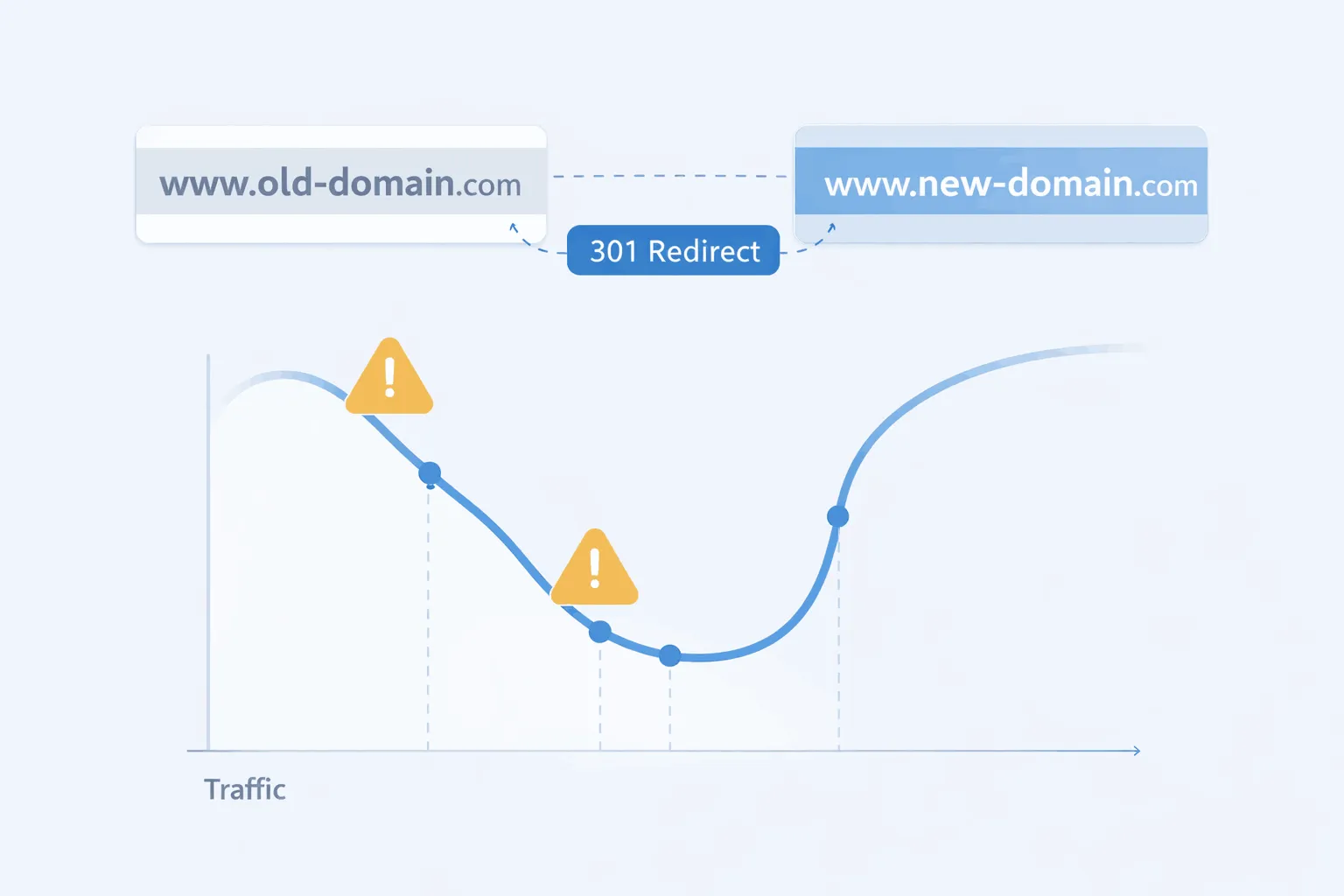
Changing a domain name is one of the highest-risk maneuvers a business can undertake. The short answer is: Yes, it will inevitably affect SEO.
When you change your domain, you are altering the URL of every single page on your site. This forces Google to recrawl, re-evaluate, and reindex your entire web property. This process is rarely seamless. You should expect traffic volatility, including significant drops, during the first month following the move.
The Risk of Authority Loss
The biggest threat is losing your “digital reputation.” Over the years, your old domain built up trust and link equity (power passed from other sites linking to you). If the transfer process is flawed, years of authority can vanish overnight. The severity of this risk is backed by hard data: 42% of sites that change domains fail to fully recover their pre-migration traffic levels.
The Non-Negotiable Migration Strategy
To be part of the successful 58%, you need a meticulous plan:
- 301 Redirects: This is the foundation. You must implement a 301 (Permanent) redirect from every old URL to its exact corresponding new URL. This mechanism transfers link equity, though the transfer is rarely a perfect 1:1 ratio.
- Meticulous Mapping: You need a comprehensive map matching old pages to new ones. If you miss pages, you create “404 errors,” which damage user experience and waste your hard-earned authority.
- Server Capacity: When you move, Google temporarily increases its crawl rate to follow the new redirects. If your server isn’t strong enough, the site might crash, causing indexing delays.
- Manual Outreach: While redirects help, the best move is to manually contact websites that link to you and ask them to update the link to your new address.
Types of Domain and Impact on Different SEO Need
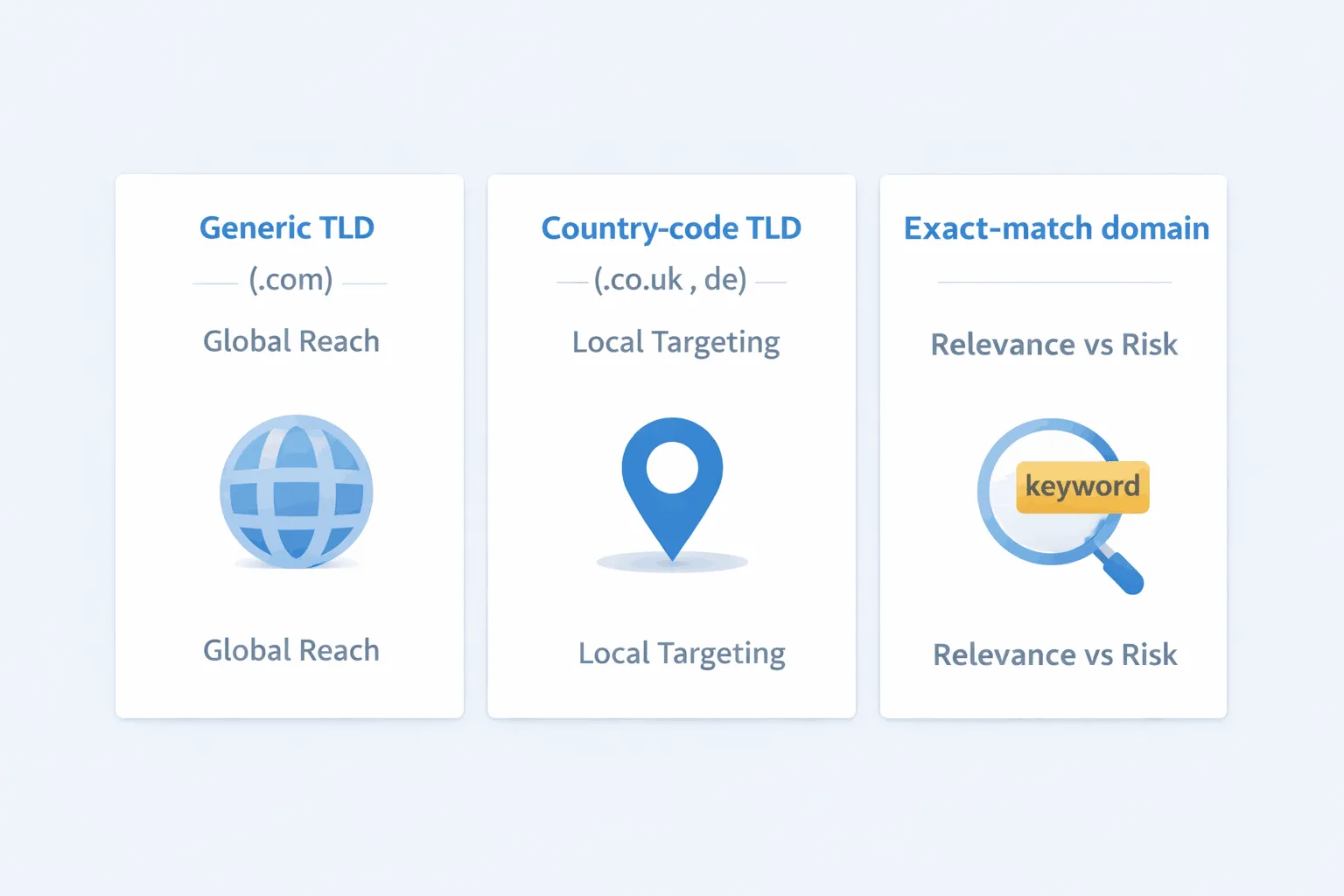
Not all domain extensions (TLDs) are created equal. Your choice must align with your geography and your audience.
1. Generic TLDs (.com)
The .com extension remains the gold standard. It is the most trusted and recognized TLD globally.
- SEO Impact: Google treats it neutrally, there is no direct ranking boost just for having a .com.
- User Impact: Its universal trust contributes to higher click-through rates and makes it easier to attract natural backlinks. It is the ideal choice for businesses seeking a global audience without implied geographic restrictions.
2. Country-Code TLDs (ccTLDs)
These are extensions like .de (Germany), .uk (United Kingdom), or .ca (Canada).
- SEO Impact: These act as a powerful geographic signal. They automatically tell Google, “This site is for people in this specific country.”
- The Trade-off: This is excellent for local rankings but can limit your global reach. A .co.uk site may struggle to rank in the USA.
- Exceptions: Google treats certain tech-focused ccTLDs like .io or .ai as generic because they are used globally, so they don’t carry the same geographic restrictions.
3. Exact Match Domains (EMDs)
An EMD is a domain that precisely matches a target keyword (e.g., buycheapbooks.com).
- SEO Impact: These are no longer the “cheat code” they once were. The 2012 “EMD Update” penalized low-quality sites relying on this tactic.
- Current Status: They are not a direct ranking factor in 2026. However, they can provide residual value in Local SEO by increasing perceived relevance. If the content is high-quality, they can work. If the content is thin, they risk triggering a spam penalty.
Domain Age and its Impact on SEO with Proof
This is one of the most debated topics in the industry. It is crucial to understand that Google does not use the age of a domain as a direct ranking signal. A domain that is one year old does not get a magical boost over a domain that is six months old.
The Proof is in the Correlation
While age isn’t a direct cause, it is a massive indicator of success. Statistics show that nearly 60% of websites that achieve a top-ten ranking on Google are three or more years old.
Why does this happen if age isn’t a ranking factor?
- Time for Trust: Older domains have had more time to accumulate what actually matters: stable backlinks and content history.
- E-A-T: Establishing Expertise, Authoritativeness, and Trustworthiness takes time. Older domains are inherently more likely to possess these signals.
- Stability: Age acts as a proxy for stability. A site that has been publishing consistent content for five years is seen as a reliable resource.
If you buy an old domain, look at the history. An old domain that was used for spam for five years will hurt you, not help you.
Expired Domain for SEO and Is It Safe to Use or Not
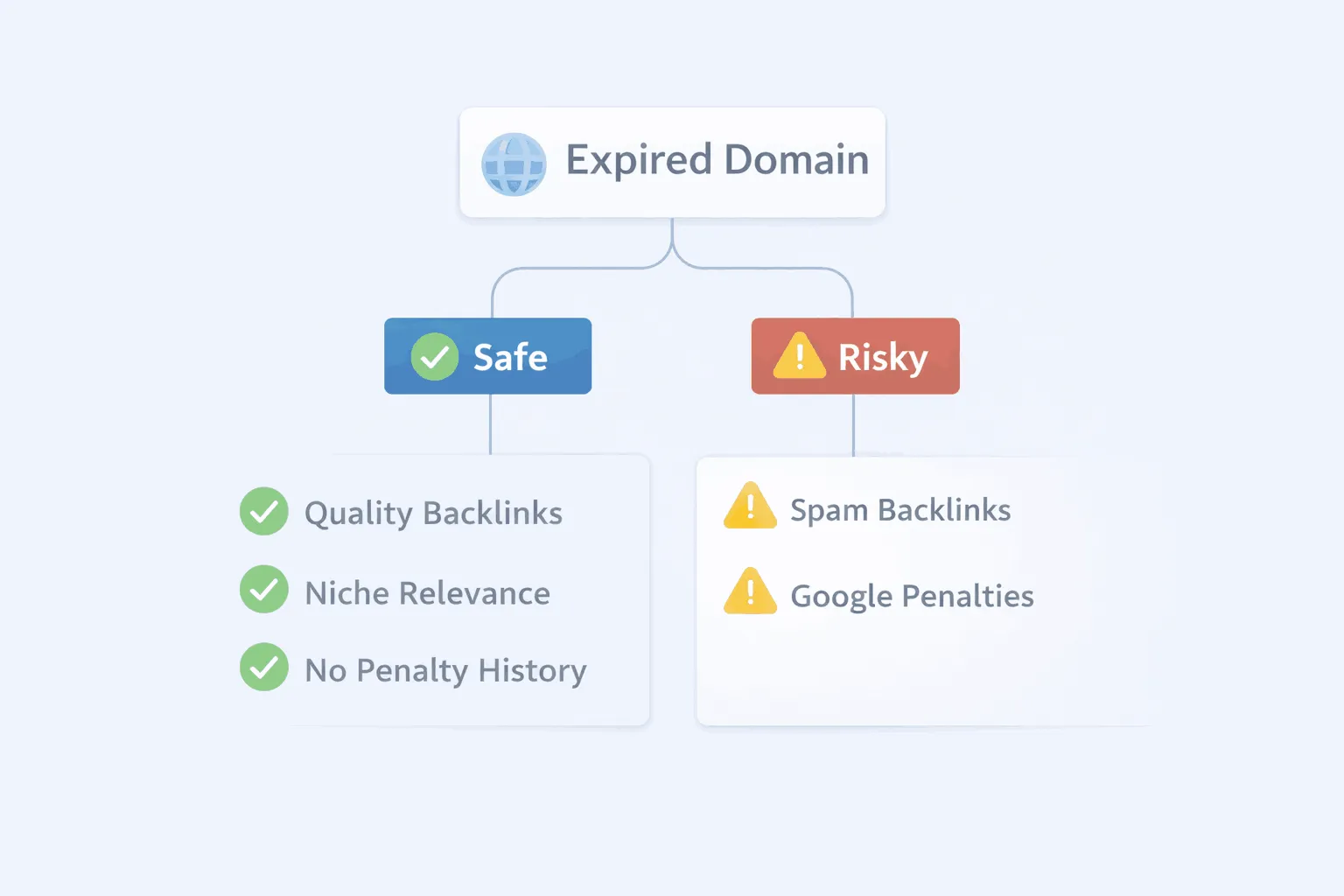
Expired domains are web addresses that were abandoned by previous owners and are available for re-registration. They are popular because they often retain “link equity” (authority) from their previous life.
Is it safe?
It is conditional. It is a high-risk, high-reward strategy.
- The Reward: You can inherit a backlink profile that would take years to build from scratch, giving you a fast track to topical credibility.
- The Risk: You might inherit a Google penalty. If the previous owner used the site for spam, Google may have “burned” the domain. Modern AI algorithms are excellent at detecting toxic link patterns.
The Expert Vetting Checklist
To use an expired domain safely, you must perform intense due diligence. Do not just look at a “Domain Authority” score.
| Vetting Check | Analysis Tools | Safe Signal | Red Flag Signal (Toxicity) |
| Link Quality Ratio | Majestic/Ahrefs | Trust Flow (TF) is high and proportional to Citation Flow. | Citation Flow is significantly higher than Trust Flow (indicates spam). |
| Niche Relevance | WayBack Machine | History and backlinks align perfectly with your new niche. | Backlinks come from gambling, pharma, or unrelated spam industries. |
| Anchor Text Audit | Ahrefs/Majestic | Diverse, natural text (branded, generic, URL). | Over-optimization: Profile dominated by exact “money keywords.” |
| Penalty Status | Search Console | Domain is indexed and shows organic traffic history. | Domain is de-indexed or shows sudden, sustained traffic drops. |
If you see a large gap between the quantity of links and the quality of links, walk away. For most established brands, a fresh, clean domain is safer than a potentially toxic expired one.
Parked Domain and its Impact on SEO
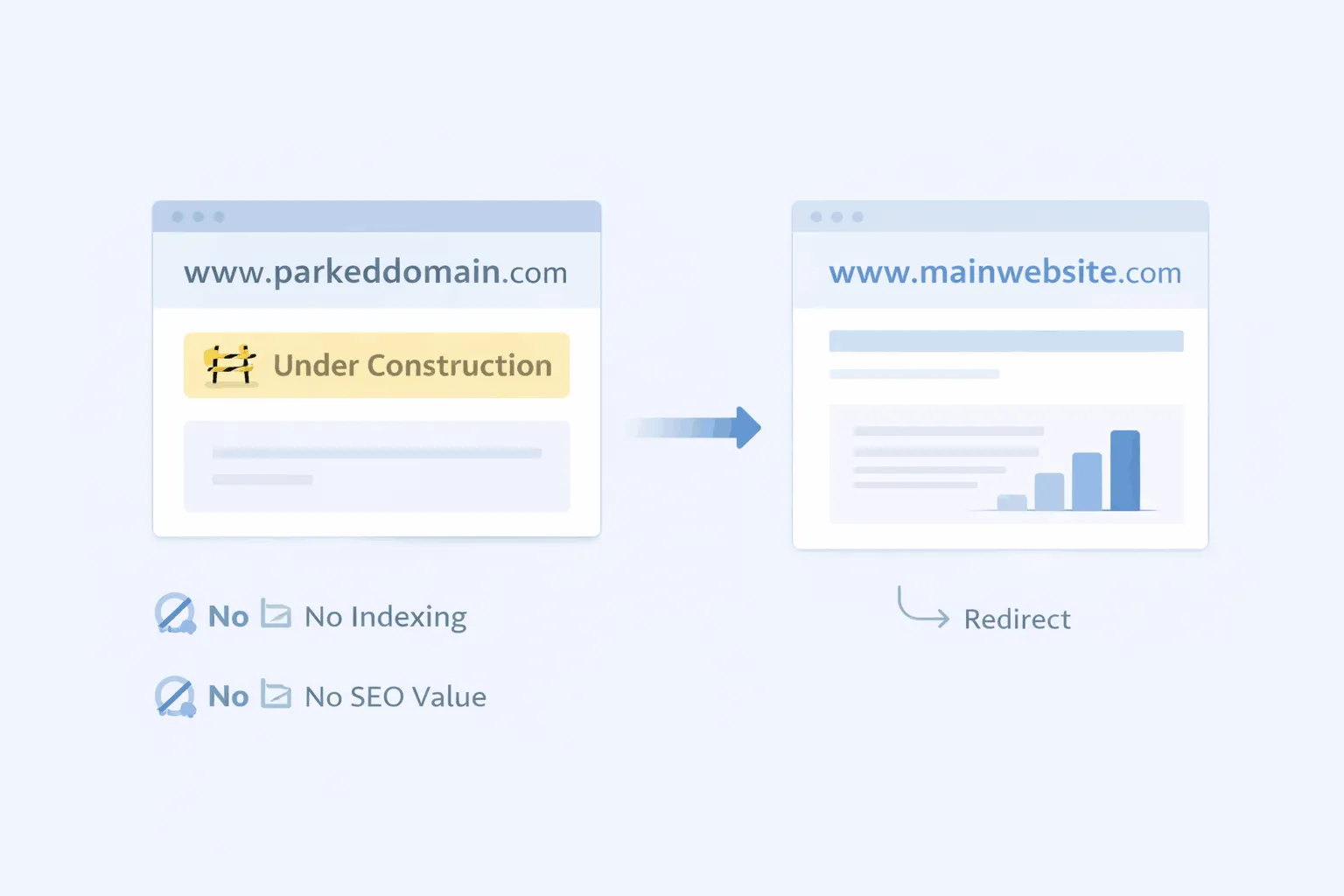
A parked domain is a registered name that is not connected to a live website, often showing a generic “Under Construction” page or ads.
The SEO Reality
From an SEO perspective, parked domains have virtually no impact.
- No Ranking Power: Search engines are designed to identify placeholders. Because there is no unique content or user engagement, Google will generally not index these pages.
- No Penalty: Conversely, having a parked domain doesn’t directly hurt you; it just sits there doing nothing.
Why Use Them?
The value is strategic, not technical.
- Brand Protection: You register misspellings of your main name to stop competitors from using them.
- Aging (Minor): Some believe keeping a domain parked establishes a “birth date,” potentially reducing the friction when you eventually launch. However, this benefit is minimal compared to the value of actual content.
Tip: If you have a parked domain that receives traffic (perhaps from people guessing the URL), do not leave it parked. Redirect it to your main website so you capture that potential value.
Does Keyword-Rich Domain Still Boost SEO in 2026?
The answer is a definitive No. A keyword-rich domain no longer offers a direct ranking boost in 2026.
The era where owning BestRunningShoes.com guaranteed you the #1 spot for “best running shoes” is over. Google’s algorithms have shifted to emphasize authority and branding. Google Search Advocates have strongly advised businesses to choose distinctive brand names over generic ones.
Why Generic Names Fail
- Hard to Brand: Generic names make it difficult to build unique brand equity.
- No “Direct” Search: It is harder to get people to search for your specific brand if your name is just a generic phrase.
- Algorithmic Indifference: Google explicitly states that keywords in domain names have “hardly any effect” on ranking.
The Modern Strategy
While keywords in domains don’t boost ranking directly, they can help with Relevance. The best strategy is to combine relevance with brandability.
- Bad: https://www.google.com/search?q=Cheap-Plumbing-Services.com
- Good: Drano.com (Pure Brand)
- Best (Hybrid): RotoRooter.com (Brandable + implies the service).
A domain name helps your SEO, but it works best when everything else on your site is strong too. Good content, a smooth experience, and steady authority building make your domain far more powerful. When these parts support each other, your domain becomes a real asset for your growth.
Conclusion
In 2026, the relationship between your domain name and SEO has shifted from a technical cheat code to a foundation of trust. Your domain is not a direct lever you can pull for rankings, but it is critical for user experience and click-through rates. The data confirms that longevity wins
To build a durable strategy, prioritize brand equity. Choose a short, memorable .com that avoids hyphens and keyword stuffing. Remember that success comes from concentrating your efforts on a single, high-quality domain rather than diluting your power across many.
If you must change domains, handle the process with surgical precision using 301 redirects to protect your history. Ultimately, the most authoritative website wins the race, and a strong domain name is the starting line for that authority.