
Creating a strong brand identity is one of the most crucial elements if a business wants to stand out among competitors. However, many franchise organizations face a unique challenge in maintaining a consistent brand identity while also driving foot traffic to individual locations.
With 46% of the google searches focused on local information, traditional SEO is not enough. It works for single-location businesses. However, franchise SEO helps businesses build brand authority while using local strategies to connect with customers in each community.
What is Franchise SEO? Definition and Core Principles

Franchise SEO is a process of improving online visibility for both the main franchise or franchisor and its individual locations or franchisees. Using this strategy helps them rank on search engines results. It not only ensures a business remains visible across all search results but also in AI- generated responses.
The importance of franchise SEO can be understood by the fact that 70% of all clicks are captured by the first three organic search results. That means for ultimate success a brand must appear on SERPs.
Franchise SEO is a combination of three interconnected SEO strategies including local, enterprise, and franchise. Franchise SEO focuses on improving visibility of a single brand utilizing the band’s overall recognition. However, local SEO is more about a specific geographic area.
Relationship between Enterprise, Franchise and Local SEO
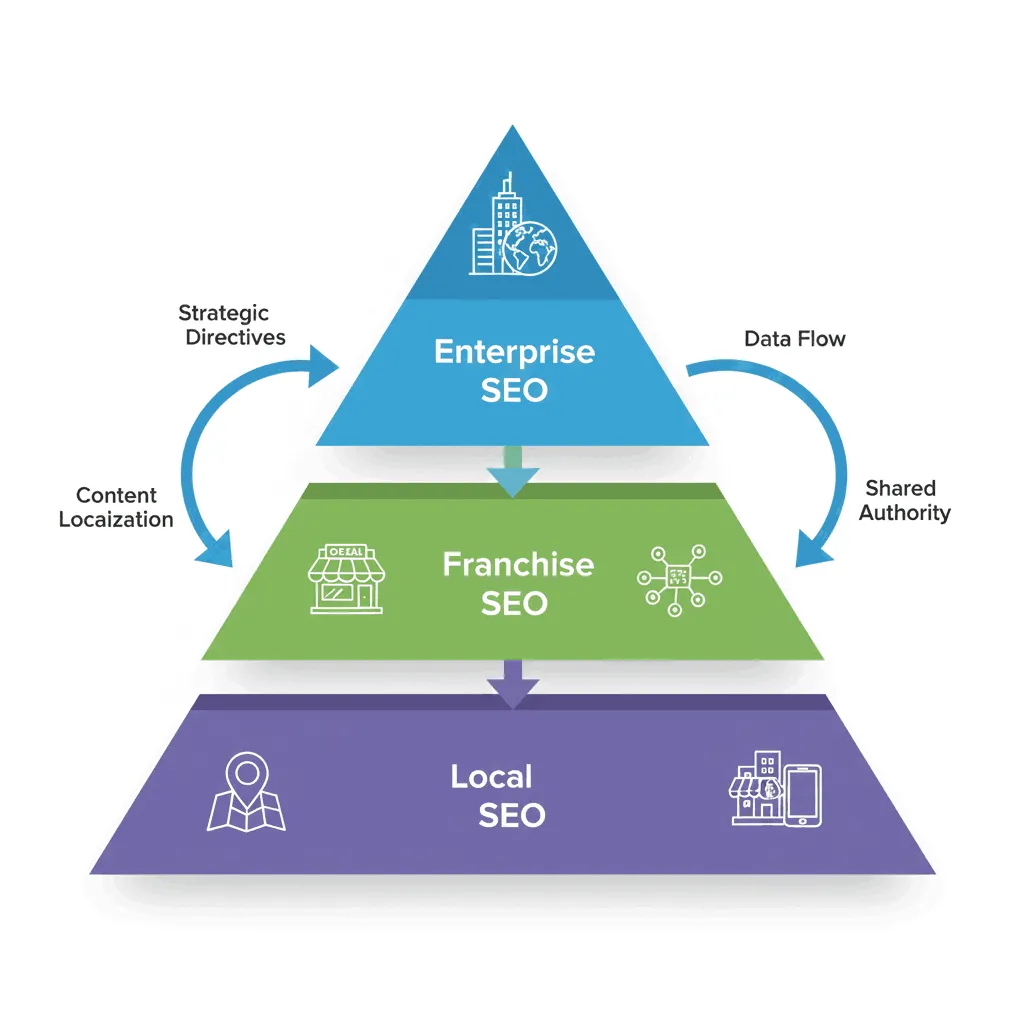
These three types of SEO work together in a structured relationship rather than competing against each other. Here’s how they work
Enterprise SEO sets the overall brand strategy for the whole company. On the other hand, franchise SEO uses the brand authority and consistency built by enterprise SEO to tailor strategy for businesses with multiple locations. And local SEO focuses on individual locations and helps them rank in their nearby geographic market.
To execute a successful franchise SEO strategy, it is important to manage all three levels together. These include building brand authority with enterprise SEO, multi-location coordination with Franchise SEO, and individual local ranking with local SEO strategy.
If a brand fails to unify these efforts, one can expect a fragmented, inconsistent, and an ineffective online presence.
What is Enterprise SEO? The Broader Context
At the highest level, enterprise SEO is the overall strategy for large, multi-franchise firms. And franchise SEO is a component of enterprise SEO.
Enterprise SEO focuses on capturing customers at every stage of their buying journey. From broad, national searches like “ top restaurant franchises” to highly specific local queries such as “fast food near me”, it covers everything.
What is Local SEO? A Foundation, Not the Full Strategy
Local SEO is one of the most fundamental components of franchise SEO. It works as a subset of the broader strategy. The main role of local SEO is to make a brand visible within a specified geolocation. It optimizes a website to rank higher for local search queries.
Local SEO helps enhance Google Profile listings with geo target keywords and build citations in online directories. Moreover, Local SEO is responsible to ensure Name, Address and Phone or NAP consistency across all platforms.
For brands with individual locations, local SEO might be sufficient. However, for multi franchise businesses, it becomes even more important. It is because local SEO directly helps attract customers to physical outlets.
For example, if someone searches “pizza restaurants near me”, if a local profile of a business is properly optimized then the nearest franchise location will appear on the top. In this way, the foot traffic for the business will increase and also build trust with customers who depend on local results while making quick buying decisions.
The Difference Between Enterprise and Franchise SEO
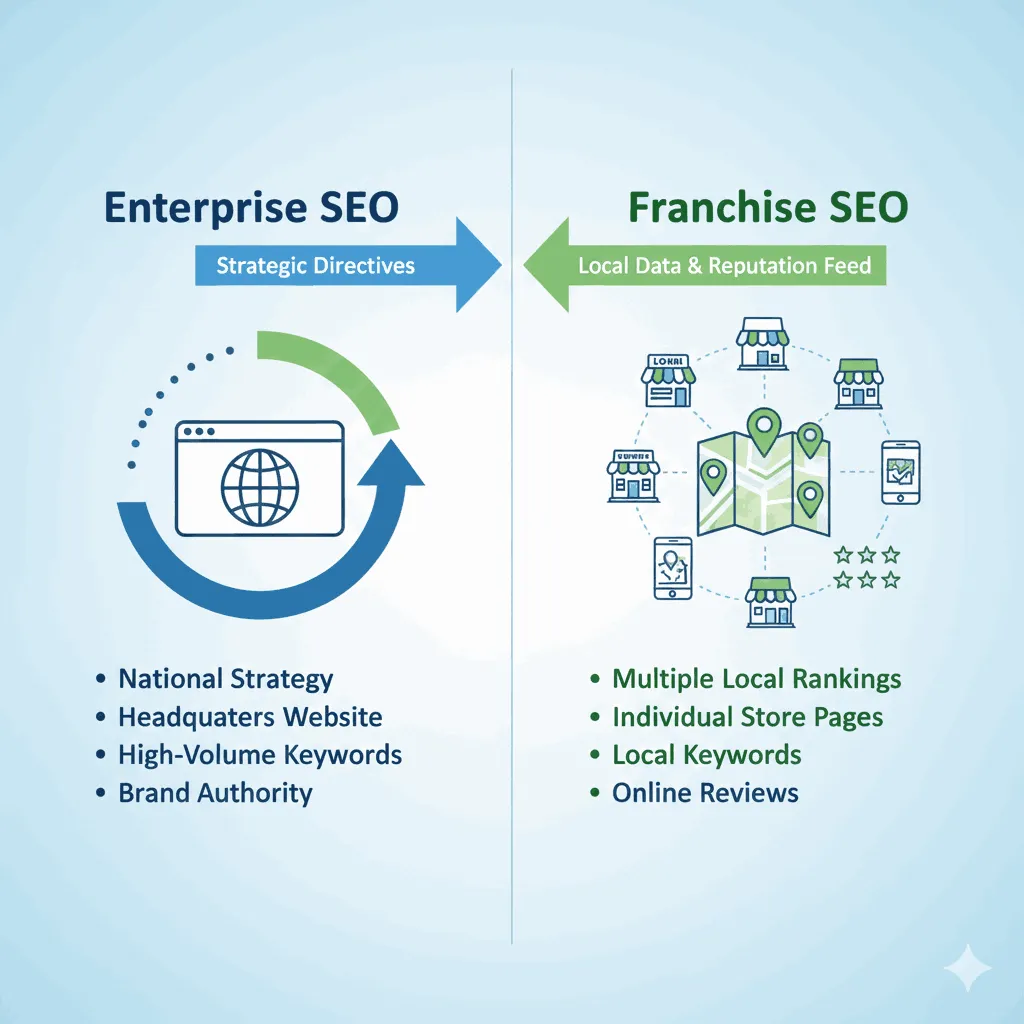
Though franchise comes under the umbrella of enterprise SEO, the two approaches work differently in execution.
Enterprise SEO is a centralized strategy and corporate teams use this to maintain consistency. In contrast, franchise SEO is used to balance central authority with the individual locations that need to grow in diverse local markets.
Centralized vs. Decentralized SEO: Pros and Cons
| Model | Pros | Cons |
| Centralized | – Strong brand consistency across all locations – Efficient rollout of strategies and updates – Access to highly specialized SEO professionals – Easier governance and cost control | – Limited ability to adapt to unique local needs – Slower responsiveness to market changes – Decision-making bottlenecks |
| Decentralized | – Faster adaptation to local market shifts – Locally relevant, innovative campaigns – Empowers franchisees, boosting engagement – Easier to scale team training | – Higher risk of off-brand messaging – Possible duplicate content or wasted marketing spend – Difficult to measure ROI across the network – Complex data governance |
The Hybrid Model: A Balanced Solution
Many successful franchises benefit from a hybrid model. Using this dual approach, the corporate team manages brand governance, technical SEO, and centralized content. It ensures overall brand consistency and authority. Local franchisees then design campaigns for their markets by including community events, regional offers, and local partnerships.
This approach allows a brand to maintain the authority of a unified identity while benefiting from the agility and authenticity of local marketing.
Why SEO Is a Critical Driver for Franchise Growth
SEO for a franchise is more than just a tool of generating website traffic. It is a strategic investment that helps strengthen the brand equity while reducing long-term marketing costs. It also builds a sustainable competitive advantage that most rivals can cut.
Moreover, if a multi franchise brand fails to optimize, they may lose their potential customers as they will never discover nearby franchise locations. It will result in lesser calls, online orders and visits.
Enhanced National and Local Visibility
When done right, franchise SEO strategy helps improve discoverability at both national and local levels. With national campaigns, a corporate brand can target broad, industry specific keywords e.g. “ “best fast-food franchises” or “restaurant franchise opportunities.” It not only helps attract prospective customers but also allures to potential franchisees interested in expanding the business.
Meanwhile, localized SEO makes sure individual franchise locations appear for geographic searches like “fast food near me” or “Pizza in Chicago”.
Using this approach, brands can create scalable systems that help them enhance their national presence while each franchise benefits from better visibility in its local community.
The results of such campaigns can be dramatic. For example, WebFX reported that a strategic franchise SEO campaign produced a 198% increase in their organic transactions and a 260% rise in organic revenue. This shows how national authority along with local execution can drive measurable business growth.
Driving Consistent Foot Traffic and Leads
Stats show that 86% of consumers use the internet to find local products and services. It means search engines have become the main gateway for a brand to be discovered. This behavior brings massive opportunities for franchise businesses. When someone types in search engine “fast-food restaurant in Chicago”, an optimized local page ensures the nearest franchise location appears in results. It will boost the likelihood of a visit.
Here are some stats that indicate that the connection between search and the real-world is undeniable. For example, 76% of people who make a local search visit the business within 24 hours. Similarly, 60% of the people contact businesses directly from search results.
Franchises can simply convert online searches into calls, leads, and visits by optimizing for these behaviors.
Building Trust, Credibility, and Brand Equity
A brand does not just get traffic by ranking high on search engines, it also builds trust. Users tend to view high ranking websites as more authoritative and reliable than others.
Credibility is further strengthened by proper online reputation management. Stats show businesses with a complete Google business profile are 50% more likely to be considered for a purchase. It proves the impact of accurate and consistent listings.
Similarly, brand consistency is equally important across all digital platforms. Whether through logos, messaging, or visual identity, customers should instantly recognize a franchise as part of a larger trusted network. This consistency reassures potential buyers, enhances authority in search engines, and reinforces overall brand equity.
Reducing Reliance on Paid Advertising for Long-Term ROI
Paid advertising delivers quick wins but demands constant spending. SEO, by contrast, compounds over time. Once high rankings are secured, traffic continues to flow without the ongoing costs of pay-per-click.
This makes SEO a cost-efficient growth engine. In fact, 70% of marketers believe SEO is more effective than paid ads for generating long-term results. For franchises, this means lower customer acquisition costs, higher margins, and sustainable growth without being overly dependent on ad budgets.
Multi-Location SEO: Managing Franchise Visibility
The foundation of franchise SEO lies in strong website architecture. Each location should have its own dedicated page, serving as the anchor for local listings and searches. These pages must go beyond generic copy, instead providing unique, geo-specific content such as:
- On-Page Elements: Geo-targeted keywords (“dentist in Chicago”), local CTAs (“Book an Appointment in Dallas”), NAP data (Name, Address, Phone), staff bios, high-quality visuals, and location-specific reviews.
- Technical Elements: LocalBusiness schema markup, internal linking to nearby locations, and embedded Google Maps.
This structure ensures both search engines and customers can easily find, understand, and trust each franchise location.
Franchises Have Separate URLs for Local SEO
One of the key technical foundations of franchise SEO is ensuring that each location has its own dedicated URL or landing page. This page serves as the central hub for all local signals, including:
- NAP details for the specific franchise location.
- Geo-targeted keywords in meta tags, headings, and content.
- Local schema markup for better search engine understanding.
- Embedded maps, directions, and local reviews.
Separate URLs prevent content duplication, improve user experience, and allow search engines to clearly identify and rank each location independently. Without this structure, franchises risk losing visibility in competitive local searches.
Scaling Local SEO for Multi-Unit Franchise Operations
Managing SEO across multiple franchise locations can quickly become overwhelming. From monitoring hundreds of Google Business Profiles to keeping NAP details consistent across directories, the workload multiplies as the brand expands.
That’s why a centralized-yet-flexible SEO framework is critical. Corporate teams should provide standardized brand guidelines, technical SEO, and content frameworks, while local franchisees contribute community-specific updates, promotions, and events.
The Power of Online Reviews
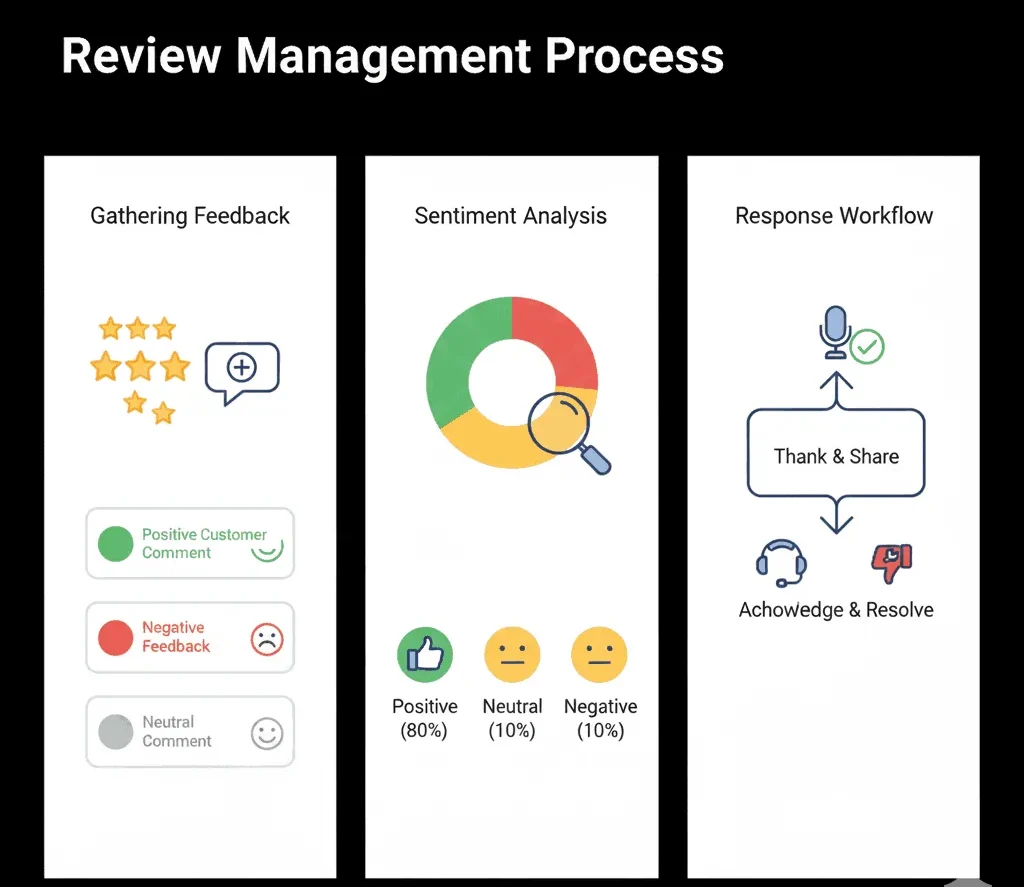
Online reviews are not just feedback, they are a critical SEO ranking factor. Google measures review volume, frequency, recency, and sentiment to assess credibility. A franchise with strong, positive reviews enjoys higher visibility and stronger click-through rates.
Beyond rankings, reviews act as social proof: 85% of consumers trust them as much as personal recommendations. For franchises, a centralized review management system is vital to maintain consistency at scale. Best practices include:
- Generating reviews via email follow-ups, kiosks, or receipt prompts.
- Responding to every review, positive or negative, to show attentiveness.
- Using standardized, brand-approved responses to maintain consistency.
Building Authority for Both Brand and Local Locations
Franchise SEO thrives on the principle that “a rising tide lifts all boats.” Corporate content and backlinks strengthen the domain, passing authority to local pages. Meanwhile, local teams build community presence through partnerships, event sponsorships, and citations in directories like Yelp or TripAdvisor.
Consistency in branding and adherence to E-E-A-T or Experience, Expertise, Authoritativeness, Trustworthiness ensure both the brand and its locations remain trusted by users and search engines alike.
A Strategic Partner for Franchise SEO
The scale of franchise SEO, covering hundreds of locations, unique content creation, NAP consistency, and technical optimization, can overwhelm in-house teams. Specialized SEO partners bring centralized systems, automation, and proven frameworks to streamline execution. This ensures brand-level authority aligns seamlessly with local-level performance, driving more traffic, leads, and sales.
Wrapping Up
Franchise SEO requires a balance of national authority and local execution. The most successful strategies blend centralized governance with local agility, create unique geo-specific content, manage reviews consistently, and build authority at both the corporate and franchise level.
Looking ahead, automation, structured data, and AI-driven reputation management will define scalable franchise SEO. Brands that invest in a unified, data-driven approach today will position themselves for sustainable visibility, stronger trust, and long-term growth.
Ready to unify your brand across locations? Mottek Group offers local SEO for multi-unit franchise operations designed to keep you competitive everywhere. Get started today and put your brand on the map!