
The cosmetics industry is expanding steadily, and lipsticks remain one of the most essential and consistently popular products in the makeup market. Due to their wide consumer appeal and repeat-purchase nature, lipsticks present a strong business opportunity for new and emerging brands. According to recent industry reports, the global lipstick market is projected to grow from $18.3 billion in 2023 to approximately $27.8 billion by 2030, at a compound annual growth rate (CAGR) of around 6%. This sustained growth makes it an ideal time for entrepreneurs to start and scale online lipstick businesses. In this guide, you will learn key strategies for entering this competitive space—from defining a clear brand position to building a strong online presence that connects with the right audience.
Market Research

Starting a lipstick business begins with thorough market research to understand both the competitive landscape and consumer demand. This step is essential because it helps identify opportunities in the market, reduce risk, and guide product, pricing, and branding decisions. Effective market analysis allows you to discover unmet customer needs and position your brand where it can stand out.
Begin by clearly defining your target audience. Determine who your ideal customers are based on demographics, lifestyle, purchasing behavior, and beauty preferences. For example, your audience may include eco-conscious consumers who prefer vegan and cruelty-free lipsticks, working professionals who prioritize long-lasting and transfer-resistant formulas, or makeup enthusiasts who enjoy experimenting with bold shades and new trends. Understanding these preferences helps you design products that solve real problems and align with customer expectations.
Next, analyze your competitors in detail. Review their pricing strategies, shade ranges, ingredient lists, packaging design, and customer feedback across e-commerce platforms and social media. Pay close attention to negative reviews, as they often highlight gaps in the market—such as poor wear time, limited shade inclusivity, or uncomfortable formulas—that your brand can improve upon. Studying competitors’ marketing messages and social media engagement also provides insight into what resonates with consumers.
Additionally, stay informed about current and emerging industry trends. Movements such as clean beauty, sustainable and refillable packaging, inclusive shade ranges, and dermatologist-tested formulas are shaping purchasing decisions. Monitoring these trends enables you to position your brand strategically while remaining adaptable to changing consumer expectations. Well-executed market research ensures that your lipstick business is built on demand-driven insights rather than assumptions, increasing the likelihood of long-term success.
Product Development
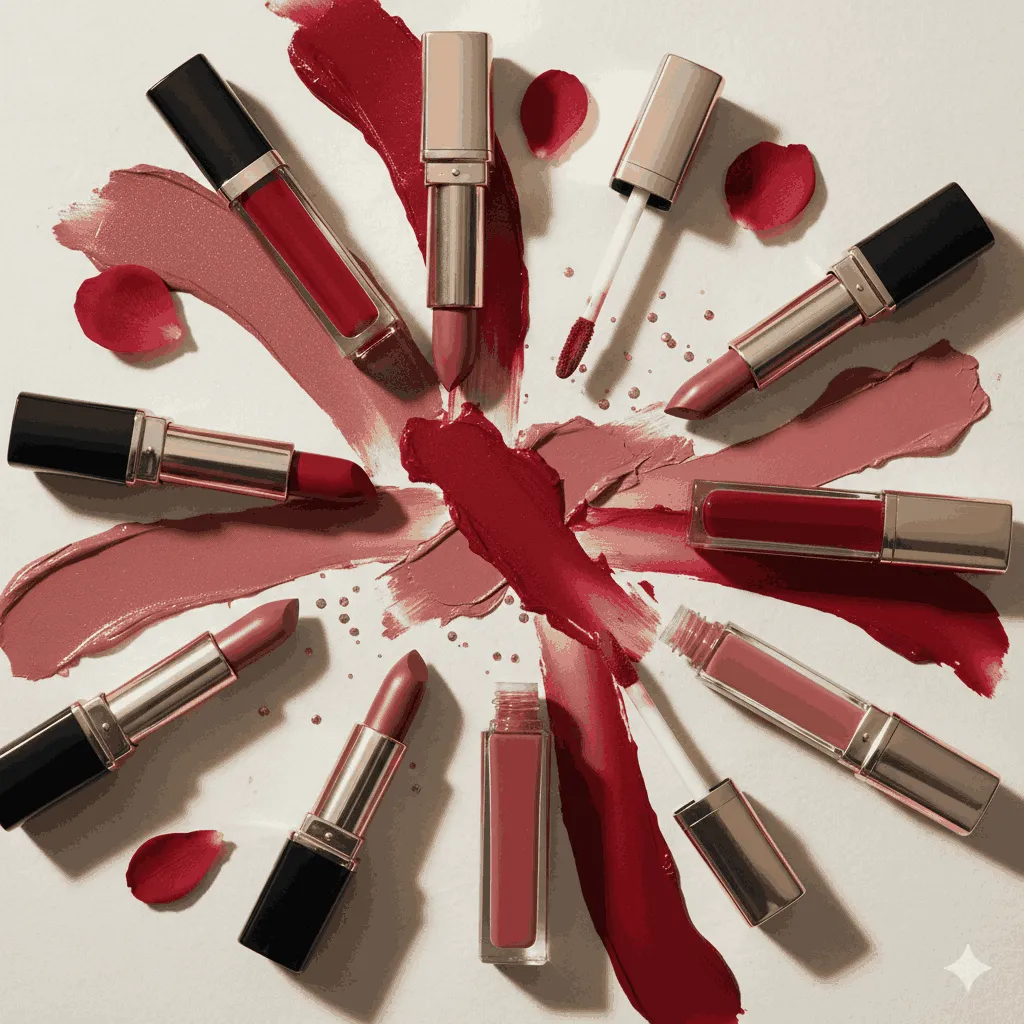
One of the most important early decisions in building a lipstick brand is determining which types of lipsticks you want to offer. Different formulations and finishes appeal to different segments of the market, and aligning your product lineup with your target audience’s needs will increase your chances of success.
Lipstick Formulation Options
Here are some of the most popular lipstick types and what makes them appealing:
- Matte Lipsticks – Matte formulas are known for their long-lasting wear and bold color payoff. They are often preferred by consumers who want vibrant, stay-put shades without frequent touch-ups.
- Creamy Lipsticks – These offer a balance of color and hydration. They are smooth, comfortable to wear, and ideal for everyday use, especially in dry climates.
- Liquid Lipsticks – Liquid formulas are usually highly pigmented and can offer extended wear. They appeal to trend-conscious buyers and are easy to apply with precision.
- Glossy Finishes – Lip glosses or glossy lipsticks provide shine and a plumping look, often preferred by younger buyers or those seeking a hydrating, luminous finish.
- Organic / Clean Formulations – The demand for natural and non-toxic beauty products has increased significantly. Formulas made without parabens, sulfates, and synthetic fragrances resonate with the health-conscious segment. You can learn more about clean beauty trends from sources such as the Environmental Working Group (EWG) Skin Deep Database .
Choosing a combination of these options helps broaden your brand’s appeal while giving you flexibility in pricing and positioning.
Developing Unique Selling Points (USPs)
Your unique selling points are the attributes that make your lipstick line stand out from competitors. Effective USPs are not just features, but solutions that matter to customers.
Examples of strong USPs include:
- Organic and non-toxic ingredients for clean beauty shoppers
- Long-wear and smudge-resistant formulas for all-day confidence
- Hydrating blends with moisturizing agents for dry or sensitive lips
- Inclusive shade ranges that cater to diverse skin tones — a fast-growing expectation in modern beauty markets as noted in reports such as the Inclusive Beauty Report.
- Eco-friendly or biodegradable packaging appealing to sustainability-focused consumers
Define what problem your product solves and how it does so better than others.
Ingredient Quality: The Heart of Your Product
Ingredient formulation is a major factor in both product performance and customer satisfaction. The fundamental components of a lipstick typically include:
- Waxes (e.g., candelilla, beeswax) — Provide structure and help the lipstick hold its shape.
- Oils (e.g., castor, jojoba, coconut) — Add smoothness and moisturization to the formula.
- Pigments and colorants — Determine shade and coverage quality.
- Emollients and butters (e.g., shea butter, cocoa butter) — Provide hydration and comfort.
High-quality ingredients usually cost more but directly translate into better feel, wear, and performance — factors that lead to positive reviews and repeat purchases. For insights into cosmetic ingredient safety and quality, resources like the International Nomenclature of Cosmetic Ingredients (INCI) database are useful for formulation research.
Packaging and Presentation
Your packaging does more than just hold the product — it communicates brand identity. Attractive, ergonomic, and sustainable packaging enhances perceived value. Explore trends in cosmetic packaging at sites like Beauty Packaging to stay informed on what consumers find appealing.
Consider packaging that:
- Protects the product during shipping
- Shows shade accurately through transparent elements
- Uses refillable or recyclable materials
- Reinforces the brand story with memorable design
Testing and Quality Assurance
Before launching, ensure that your lipsticks undergo rigorous testing:
- Wear testing for longevity and finish performance
- Allergy and sensitivity testing if claiming gentle or hypoallergenic formulas
- Regulatory compliance in your target markets (e.g., FDA regulations in the U.S.
Testing enhances product reliability and protects your brand reputation.
Create or Source Your Lipstick

Once your product concept is defined, the next critical step is deciding how your lipsticks will be made. This decision directly affects product quality, cost, scalability, compliance, and brand credibility. Broadly, you have two options: developing lipsticks in-house or partnering with an established cosmetic manufacturer. Each approach has its advantages and limitations, depending on your budget, expertise, and long-term goals.
Option 1: Creating Lipsticks In-House
Producing lipsticks yourself offers maximum creative control, but it also comes with significant responsibility. In-house production requires a solid understanding of cosmetic formulation, hygiene standards, and regulatory compliance.
To manufacture lipsticks independently, you will need:
- Proper formulation knowledge, including ingredient compatibility and stability
- Specialized equipment such as melting tanks, molds, mixers, and temperature controls
- A clean, controlled production environment to prevent contamination
- Access to compliant cosmetic-grade raw materials
- Knowledge of labeling, ingredient disclosure, and safety requirements
In-house production is best suited for small-batch or artisan brands, test launches, or founders with prior cosmetic or chemistry experience. However, scaling production can be challenging, and mistakes in formulation or sanitation can lead to inconsistent quality or regulatory issues.
For safety and compliance guidance, many founders refer to official resources such as the U.S. FDA cosmetics regulations or equivalent authorities in their target markets.
Option 2: Partnering With a Cosmetic Manufacturer (Private Label or Contract Manufacturing)
Working with an established manufacturer is the most common route for modern lipstick brands, especially those planning to scale. Cosmetic manufacturers already have the necessary infrastructure, certifications, quality control systems, and production expertise.
Benefits of working with manufacturers include:
- Access to tested and compliant formulations
- High production efficiency and consistent quality
- Regulatory compliance and safety documentation
- Faster time-to-market
- Ability to scale production as demand grows
Manufacturers typically offer private-label (pre-formulated products with custom branding) or custom formulation services. Custom formulations provide greater differentiation but often require higher minimum order quantities (MOQs) and longer development timelines.
Before selecting a manufacturer, it is essential to:
- Contact multiple suppliers for comparison
- Request product samples to evaluate quality, texture, and wear
- Understand minimum order quantities and pricing tiers
- Ask about customization options (shades, finishes, ingredients)
- Confirm certifications such as GMP (Good Manufacturing Practices)
- Review lead times, packaging options, and logistics support
Choosing the Right Path for Your Brand
The right manufacturing approach depends on your business stage and objectives:
- In-house production works well for testing ideas, niche positioning, and limited releases
- Manufacturer partnerships are ideal for brands focused on growth, consistency, and wider distribution
Many successful lipstick brands start with manufacturers to establish market presence and later explore custom or hybrid production models as they grow.
Drop Shipping vs. Buying in Bulk
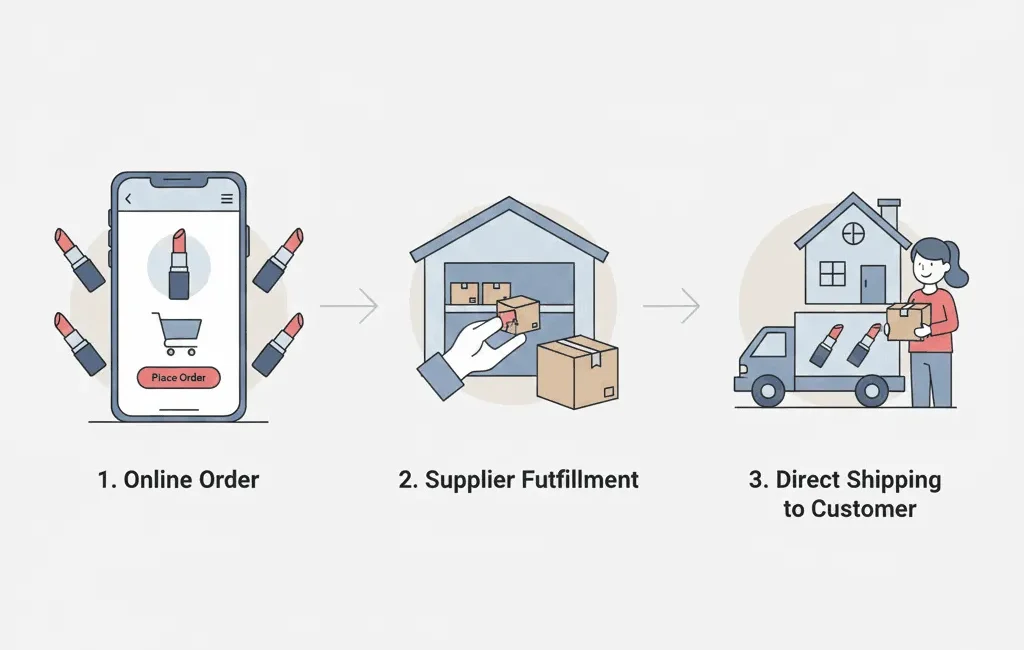
How you store and deliver your lipsticks plays a major role in your overall business structure, profitability, and customer experience. Two of the most common fulfillment models in the cosmetics industry are drop shipping and buying inventory in bulk. Each option comes with distinct advantages and limitations, and the right choice depends on your budget, brand positioning, and long-term growth goals.
Drop Shipping Model
In the drop shipping model, you partner with a supplier or manufacturer who handles inventory storage and order fulfillment. When a customer places an order on your website, the supplier ships the product directly to the customer, while you focus primarily on marketing, branding, and customer service.
Advantages of Drop Shipping:
- Low upfront investment, as you do not need to purchase inventory in advance
- No need for warehouse space or inventory storage
- Reduced operational complexity for new founders
- Easier to test products or markets before scaling
Limitations of Drop Shipping:
- Limited control over product quality checks and packaging
- Longer shipping times, which may affect customer satisfaction
- Lower profit margins due to supplier fees
- Greater reliance on third-party suppliers for consistency and reliability
Drop shipping is often suitable for early-stage businesses, market testing, or entrepreneurs who want to validate demand before committing significant capital.
Buying in Bulk (Inventory-Based Model)
Buying in bulk involves purchasing lipsticks in larger quantities upfront and managing storage, packaging, and fulfillment yourself or through a third-party logistics provider (3PL).
Advantages of Buying in Bulk:
- Higher profit margins due to lower per-unit costs
- Full control over product quality, packaging, and branding
- Faster shipping and better customer experience
- Ability to create custom packaging, bundles, or promotions
Challenges of Buying in Bulk:
- Higher upfront investment required
- Need for storage space or warehouse solutions
- Inventory management responsibilities, including stock tracking
- Risk of overstock or slow-moving products
This model is better suited for brands with proven demand, strong branding, and the ability to manage logistics efficiently.
Brand Development
Imagine branding as a personality of your lipstick line – it is the feeling your customers get any time they mention your name or products. Just like how a good strong brand is scripted, you should understand there is a style behind the development of the brand as well. It should be something that is real, unique, and something that any potential audience would resonate to on an emotional level.
Start by defining the mission of your brand. The mission must possess your deeply held beliefs and be relevant to the customers you are targeting. The visuals attached to your business such as the logo, the packaging, and the look of the brand must briefly explain the story being represented. For eco-friendly lipsticks, you might want to avoid excessive packaging and go with the recyclable ones. If you own a luxury brand, use fancy and elite looking packaging instead.
Build an E-Commerce Store
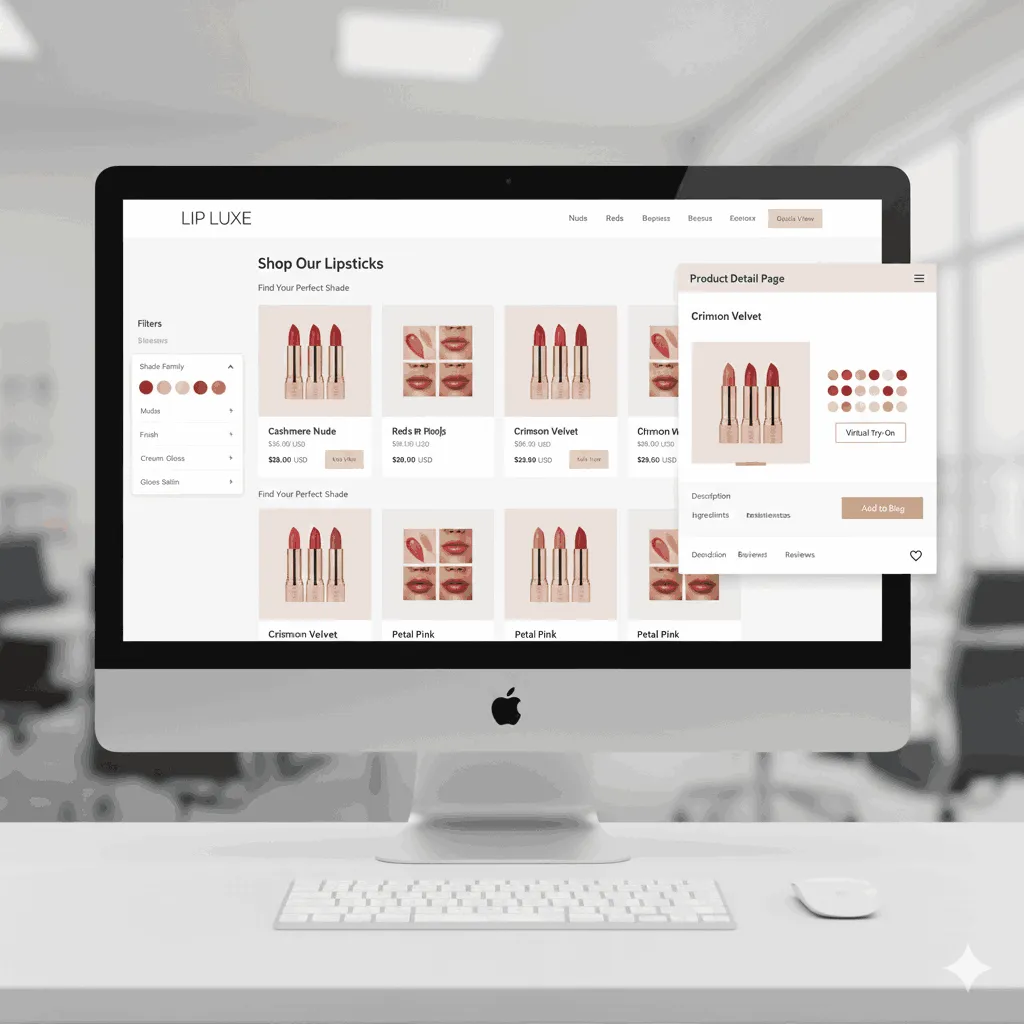
Creating an e-commerce store is the key to your online lipstick business. Your website is the online front face of your business and is therefore the first point of contact with your consumers. Below are some guidelines that can help you to develop your e-commerce store:
- Choose a user-friendly platform: Use platforms like Shopify, WooCommerce or BigCommerce since they have beauty templates that are designed to promote your products well.
- Enhance the shopping experience: Some of the features that can be included on the website are well organized navigation menus, detailed product information and quality images. It is also important to show lipsticks both in packaging and on different skin tones through images and videos to give buyers a better idea about the color, texture, and finish.
- Ensure mobile optimization: Most of the consumers make their purchases using mobile devices, thus your site must be optimized for use on such devices.
- Streamline the checkout process: Provide a good and secure checkout process for the customers with different payment methods such as credit cards, PayPal, and digital wallets.
Inventory Management
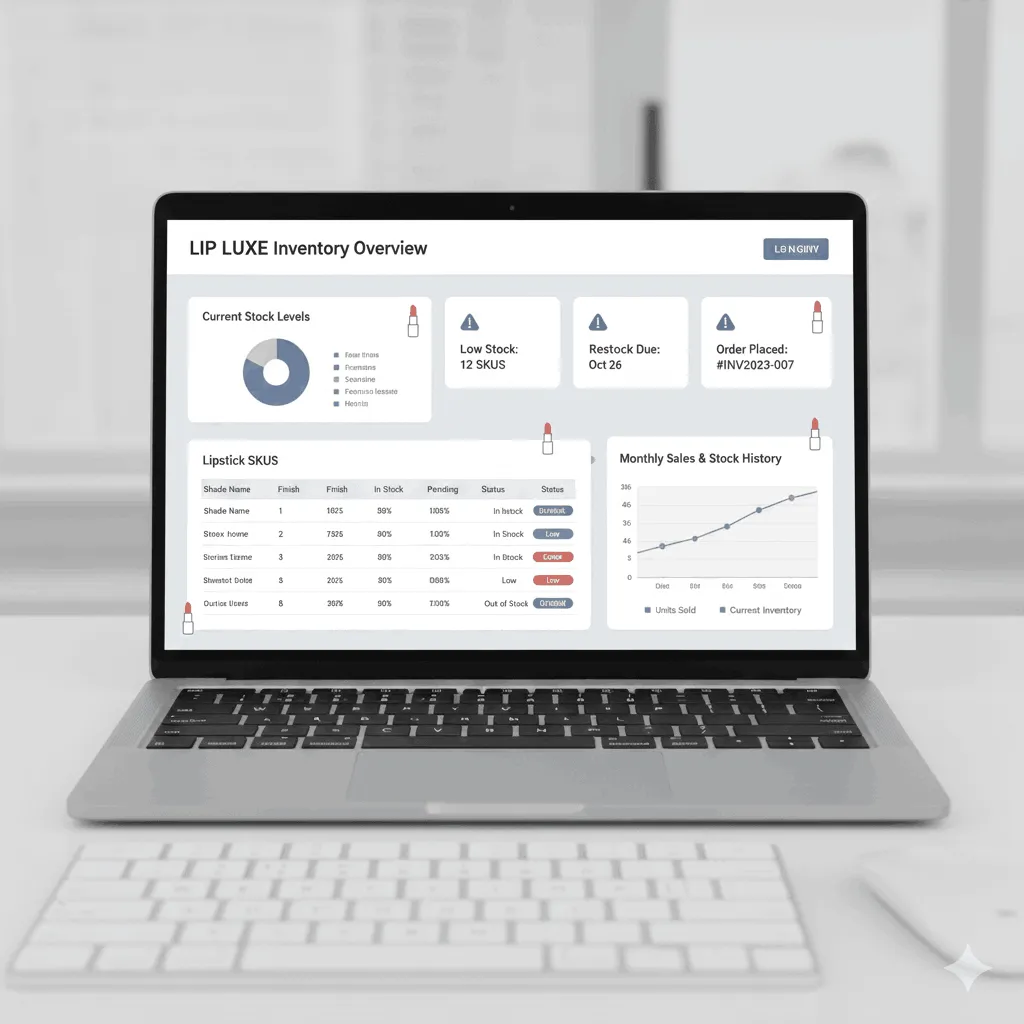
Managing inventory involves a lot of work, discipline, and effective collaboration. A well managed inventory ensures the best possible outcome for the business. However, having too much inventory only ties up unnecessary capital while having too low will leave customers feeling disappointed.
In this case, it is best to set up an inventory management system that will allow for stock monitoring. This way, you can keep an eye on inventory levels and have a stock system linked to your e-commerce platform. Automatic alerts also allow for further convenience by notifying you once stock levels are low enabling you to reorder on time.
Always keep an eye for potential seasonal trends when setting up an inventory. As an example, consider how some colors or fabric are preferred during certain seasons. Ensuring that all this information is available to you will help keep track of your best and worst selling products.
Utilize Social Media Platforms
Social media channels give you an opportunity to show off your lipsticks. Instagram is ideal for posting great pictures of your products, swatches and looks. Stories and Reels can be used to display application methods, behind the scenes activities, quick tutorials and more. Ensure to develop an aesthetic that fits with your brand image.
Do not forget to take advantage of trending sounds or challenges that are appropriate to your brand. Pinterest is good at presenting to people who are about to buy makeup or need to be motivated. You can also advertise on TikTok or Snapchat through short videos demonstrating lipsticks application, adding simple techniques, swatches, or brief backstory about your brand.
Leverage Online Marketplaces
Online marketplaces can be viewed as additional storefronts where you can sell your products and reach more people. While your own website gives you full control, marketplaces, including Amazon, Etsy, or eBay, connect you to the already existing customer audience.
Every platform has its own set of guidelines and the best way to approach it. In Amazon, pay attention to the product titles and descriptions when creating them, and make sure to use relevant keywords. Put high resolution pictures and provide as much information about the product as possible. Consider using Amazon’s Fulfillment by Amazon (FBA) service to handle shipping and customer service.
Etsy is perfect for custom or unique products and services such as lipsticks. Highlight the unique facts like for e.g. your products are handmade, contain only natural ingredients, are vegan, or have certain benefits like hydration. Learn how to use tags to help customers discover your products.
Marketing Strategies
Marketing involves engaging the customers on various platforms. You can do this with the following strategies:
- Use targeted social media ads: Social media sites as Facebook and Instagram can be of great help in reaching the beauty and cosmetics target audience. Design very attractive ads that focus on the unique characteristics of your lipsticks.
- Collaborate with influencers: Identify and engage with beauty vloggers or influencers that cater to your target market. Both macro and micro-influencers can generate interest, with the latter having a tendency of having a very loyal following.
- Offer attractive incentives: To attract first-time customers, you can offer them discounts, free shipping charges, or buy one get one free offer. Employ the use of time sensitive offers so that people will be compelled to act quickly and buy.
Search Engine Optimization (SEO)
When it comes to SEO, it is similar to dropping breadcrumbs leading customers into your store through search engines. Focus on phrases that your customers may want to search for when buying lipsticks. Building content alongside these phrases feels organic. For example, create blogs about “How to find a suitable pink lipstick” or “Trendiest lip colors of 2024.”
Moreover, integrate keywords into your product descriptions, meta titles, and even the alt attributes for your images. Also, you should enhance the speed and mobile compatibility of your site for a better search engine ranking. Furthermore, fresh and captivating content should be posted on your website to attract and retain customer attention.
Social Media Optimization (SMO)
Social Media Optimization also seeks to improve the performance of your content in social networks. Find out what beauty-related hashtags have gained popularity lately and upload content that suits the trends.
Use Later or Hootsuite to find the best times for posting your materials. Monitor what content works best and modulate your strategy accordingly. Consider using engaging formats such as polls, Q&A, or reels to increase engagement. Work together with beauty influencers to extend your audience scope and cause hype about your products.
Launch Your Product
Considering the launch as the grand premiere in a theatre, make sure that it is memorable and exciting for the customers. Generate anticipation through teaser content, sneak peeks of what to expect, and a countdown for the lipstick reveal.
Set up virtual events such as makeup tutorials and Q&A sessions for the launch day. Give special launch-day offers, call makeup artists to give a makeup tutorial using your lipsticks, and ask the influencers to go live and promote your products.
Customer Engagement
To build strong customer relationships, come up with a loyalty program where customers who purchase an item more than once are rewarded with points, bonuses, or even early access to some of the newer product lines.
Work on responding to the questions and addressing the concerns of customers promptly. Make use of their feedback to enhance your lipsticks. Consider utilizing advanced recommendation techniques to suggest items for purchase based on previous items customers purchased.
Analyze Business Performance
Analysing the performance of the products on a weekly or bi weekly basis will help you understand what works and what doesn’t and what needs to be improved for the overall performance of the product. You are required to keep an eye on key performance indicators (KPI) which includes the overall sales revenue generated, the cost of acquiring a customer, and their lifetime value. Use Google Analytics and other helpful applications to help you track website visits and customer behavior. Pay attention to your social media indicators to determine who is more interested in what material.
Expand Your Product Line
After you have created your standard lipsticks range, it is advisable to expand further. Pay attention to the customers’ suggestions – they may need lip liners or lip glosses to go with the lipsticks they have already purchased.
It is also possible to introduce the idea of seasonal collections or limited edition products to ensure that you are always offering something new to your clients. Collaborate with other artists or influencers to create special collections that will give a new edge to your brand.
Conclusion
Now you know that it requires a considerable effort to set up a lipstick selling business online. Focus on coming up with a premium quality product, build a strong reputation and real brand, and form good connections with potential customers. Success takes time and it is recommended to start small, learn, and progress steadily.
There is no end to the beauty industry as far as invention and growth goes. If you stick to your dream, remain adaptable to the changing needs of the beauty market, your lipstick business will secure a place in this competitive beauty market. Be dedicated to the process and work hard to create a unique online lipstick brand.